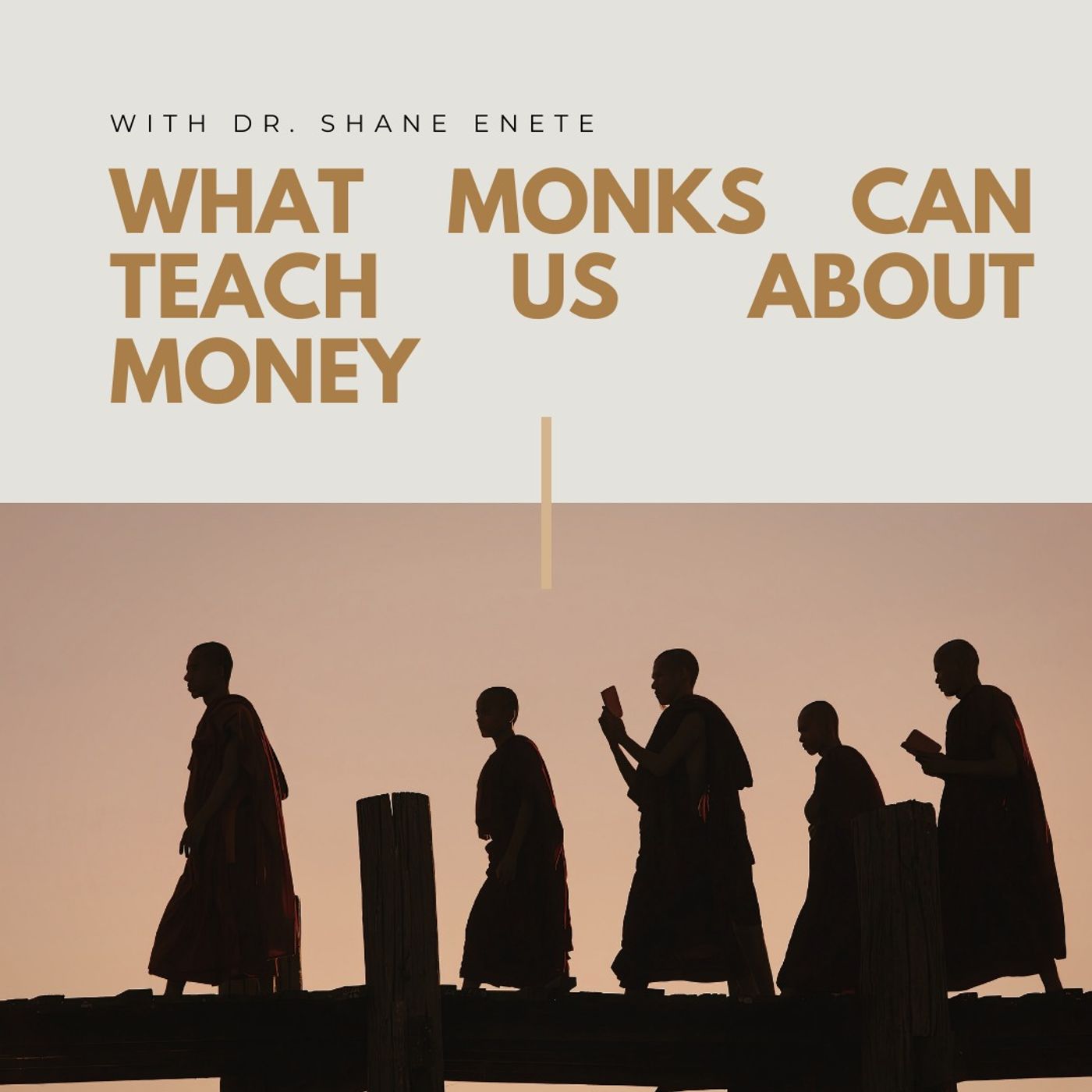
What Monks Can Teach Us About Money with Dr. Shane Enete | FaithFi
February 17, 2026
What Monks Can Teach Us About Money with Dr. Shane Enete
Faith & Finance with Rob West
Monks and money don’t seem to go together—but maybe they should. Early Christian monastics developed a biblical approach to possessions that offered freedom from fear and created space for generosity. Their example continues to resonate with believers navigating modern financial pressures.
Dr. Shane Enete, Chair of the Finance Department at Biola University, joins the show today to help us explore what he calls “monk finances,” drawing on early Christian history to uncover insights that remain strikingly relevant today.
Monks and money don’t seem to go together—but maybe they should. Early Christian monastics developed a biblical approach to possessions that offered freedom from fear and created space for generosity. Their example continues to resonate with believers navigating modern financial pressures.
Dr. Shane Enete, Chair of the Finance Department at Biola University, joins the show today to help us explore what he calls “monk finances,” drawing on early Christian history to uncover insights that remain strikingly relevant today.
Why Monks and Finances Feel Like Opposites
For many people, the idea of monks and money in the same sentence feels contradictory. That perception has historical roots.
In the early centuries of the church, some believers reacted to growing spiritual complacency by withdrawing from society. These early monks sought lives of radical devotion and discipline. In extreme cases, they rejected material possessions entirely, viewing the physical world—and even the body itself—as spiritually dangerous.
But this wasn’t the final word on monastic life.
Leaders like St. Anthony and St. Benedict helped reshape the movement. They recognized that God created the material world before the fall; therefore, possessions, work, and even money could be used for His glory. Instead of rejecting material things, they began developing thoughtful, disciplined ways to steward them.
Out of that shift came a surprisingly rich theology of money.
Recovering a Biblical View of Possessions
As monastic communities formed, they began to rethink how Christians should live with resources.
Rather than treating money as evil, they saw it as necessary for life—but not as a source of identity or security. Their approach emphasized moderation, equality, and shared responsibility.
Their guiding principle was simple: Meet your needs, then help meet the needs of others.
Money became a tool for self-sufficiency that led to hospitality, not a means of achieving independence from God. This perspective echoed the Apostle Paul’s teaching to the early church, especially in communities wrestling with wealth and inequality.
In many ways, the monks’ worldview stands in contrast to modern financial culture. Where today’s systems often prioritize accumulation and long-term personal security, the monastic tradition emphasized dependence on God and care for neighbor.
Economic Sufficiency vs. Economic Security
One of the most striking insights from monastic life is the distinction between economic sufficiency and economic security.
The monks worked hard. They cultivated gardens, produced goods, and provided for themselves. But they intentionally stopped short of building wealth for personal protection. Their goal was sufficiency—having enough to live and to share.
A well-known story about St. Anthony illustrates this progression. After initially living in isolation, he began growing food to avoid burdening others. Eventually, he expanded his efforts to feed visitors and care for those who came seeking wisdom. His work produced enough for his needs and created margin for generosity. That pattern shaped monastic communities:
Work diligently
Meet basic needs
Create margin
Practice hospitality
They believed the danger came when financial planning shifted from provision to self-protection—when wealth began to replace trust in God.
Guarding the Heart from the Love of Money
Monks viewed wealth with a sober realism. They saw it as useful but spiritually risky.
Money, they believed, has a way of whispering false assurances: “You’re safe. You’re secure. You don’t need God.”
To guard against this, monastic communities developed “rules of living”—structured rhythms that shaped how they worked, spent, and shared. These practices served as guardrails, protecting their hearts from drifting into consumption and self-reliance.
The goal wasn’t deprivation. It was clarity. They wanted money to remain a servant, never a master.
The Power of an “Economy of Excess”
One of the most compelling ideas to emerge from monastic life is what might be called an “economy of excess.”
In many monasteries, individuals were trained not to consume everything they were given. Instead, they intentionally left a portion unused—placing it at the center of the table for others.
Imagine a community of dozens of people, each holding back a small amount. The result was abundance. Tables overflowed, and anyone in need could be cared for.
This practice created margin without requiring wealth.
It also mirrors biblical principles found throughout Scripture. In the Old Testament, landowners were instructed not to harvest their fields to the edges so the poor could gather what remained. The design was intentional: leave space for others, and generosity becomes woven into everyday life.
When consumption stops short of the limit, community flourishes.
Freedom from Financial Anxiety
The monks’ approach offers a powerful corrective to modern financial anxiety.
Today’s culture often promotes endless striving—more income, more savings, more security. Yet the pursuit rarely ends. Wants expand, expectations rise, and contentment slips further away.
Monastic wisdom points in another direction: simplify, define “enough,” and trust God with the rest.
There is a surprising freedom in that posture. When life is not driven by maximizing consumption, gratitude grows. When security is not tied solely to accounts and assets, dependence on God deepens.
Their example reminds us that peace is not found in having everything, but in needing less and sharing more.
What We Can Learn Today
The monks did not reject money. They reoriented it. They used resources to:
Depend on God
Care for their communities
Practice hospitality
Serve the poor
Their lives challenge modern assumptions about success, security, and sufficiency. They invite believers to examine not just how money is used, but what role it plays in shaping the heart.
Perhaps their most enduring lesson is this: Financial wisdom is not measured by accumulation, but by alignment—with God, with others, and with the purposes of His Kingdom.
Ancient as it may seem, that vision speaks directly to our moment.
On Today’s Program, Rob Answers Listener Questions:
I’m working with a new financial advisor who’s recommending an Allianz Index Advantage Plus annuity. He says it offers downside protection, no fees to us, and growth potential with gains that can be locked in several times a year. I’m not familiar with this—what should I know?
My mom, my sister, and I all own a home together. When my mom passes away, will her share automatically be divided between us, or does something else happen legally?
Remember, you can call in to ask your questions every workday at (800) 525-7000. Faith & Finance is also available on Moody Radio Network and American Family Radio. You can also visit FaithFi.com to connect with our online community and partner with us as we help more people live as faithful stewards of God’s resources.
Hosted by Simplecast, an AdsWizz company. See pcm.adswizz.com for information about our collection and use of personal data for advertising.