Setting goals can be a wise and worthwhile pursuit. Whether we're building a career, saving for retirement, improving our health, or investing in our families, goals help us live with purpose and intentionality. But how do we pursue our ambitions without allowing success to define us?
Proverbs 16:9 reminds us, "The heart of man plans his way, but the LORD establishes his steps."
God never intended for our accomplishments to become the measure of our worth. Our identity is secure in Christ, not in what we achieve. That means we can dream boldly, plan wisely, and work faithfully while trusting God with the results.
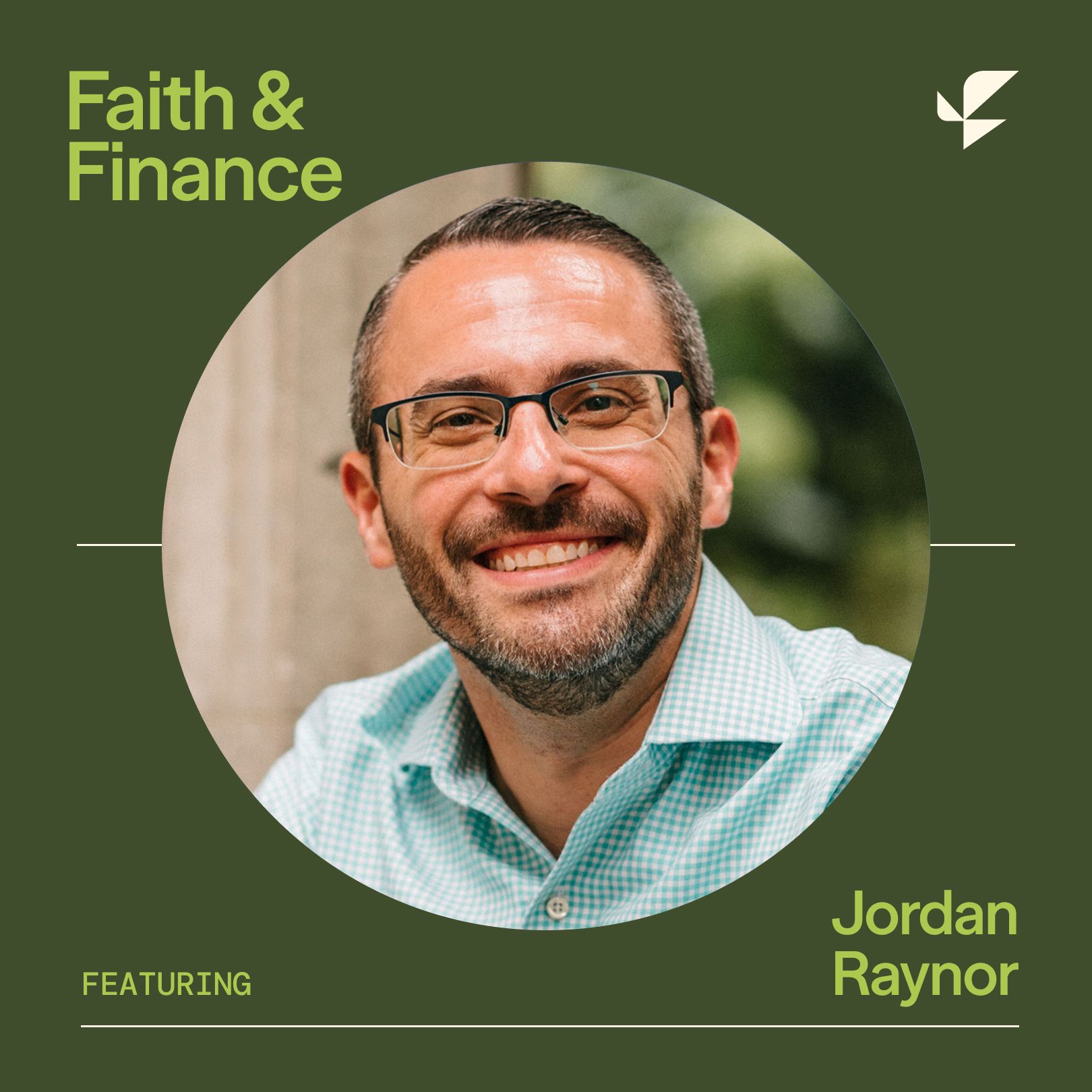
Bestselling author and entrepreneur Jordan Raynor explores this tension in his book, Redeeming Your Goals: Seven Biblical Principles for Achieving Your Goals with Christ-like Confidence, Consistency, and Character. His message is that Christians don't need less ambition. We need ambition that reflects the heart and purposes of God.
Setting goals can be a wise and worthwhile pursuit. Whether we're building a career, saving for retirement, improving our health, or investing in our families, goals help us live with purpose and intentionality. But how do we pursue our ambitions without allowing success to define us?
Proverbs 16:9 reminds us, "The heart of man plans his way, but the LORD establishes his steps."
God never intended for our accomplishments to become the measure of our worth. Our identity is secure in Christ, not in what we achieve. That means we can dream boldly, plan wisely, and work faithfully while trusting God with the results.
Pursuing Redemptive Goals Instead of Counterfeit Quests
Is ambition itself a problem for Christians? Not according to Raynor.
Jesus Himself lived with a clear purpose. Colossians 1:19–20 describes the remarkable scope of His redemptive work:
"For in him all the fullness of God was pleased to dwell, and through him to reconcile to himself all things, whether on earth or in heaven, making peace by the blood of his cross."
And throughout Scripture, believers are called to live intentionally. In Ephesians 5:15–16, Paul writes, "Look carefully then how you walk, not as unwise but as wise, making the best use of the time, because the days are evil."
The problem, then, isn't necessarily our goals. It's why we're pursuing them and how we measure their success.
Raynor calls Christians to pursue what he describes as redemptive quests—goals pursued with, like, and for God, for His glory and the good of others rather than our own fame or fortune.
Even ordinary ambitions, such as building a business, improving our physical health, or saving for retirement, can become opportunities to glorify God when pursued with the right motives. But there are counterfeit quests that can quietly redirect our ambitions away from God's purposes. Raynor identifies three common examples:
Renown: Seeking recognition, influence, or personal fame instead of serving others.
Recreation: Making personal pleasure, experiences, and bucket-list achievements our ultimate pursuits.
Retirement: Viewing the later years of life as an opportunity to abandon meaningful work in favor of endless leisure.
None of these concerns means that recognition, recreation, or retirement savings are inherently wrong. The danger comes when they become the defining purpose of our lives.
Consider retirement. Preparing financially for a season when we may no longer be able to work for pay is an act of wise stewardship. But retirement from paid employment doesn't mean retirement from God's purposes. 1 Corinthians 15:58 encourages believers:
"Therefore, my beloved brothers, be steadfast, immovable, always abounding in the work of the Lord, knowing that in the Lord your labor is not in vain."
Retirement, then, can become an opportunity to redirect our time and experience toward mentoring, serving, volunteering, and investing in future generations.
Let God Expand Your Imagination
Another important principle in Redeeming Your Goals is what Raynor calls "baptizing your imagination."
Too often, our goals are limited by what we believe we can accomplish through our own strength. Yet Scripture continually reminds us that God's power and purposes extend far beyond our limitations.
Consider the disciples. When Peter imagined forgiving someone seven times, Jesus challenged him to think far beyond that number. When Andrew saw only five loaves and two fish, Jesus demonstrated how those modest resources could feed thousands.
Raynor suggests that Jesus was challenging His disciples to consider not merely what they could accomplish, but what God could accomplish through them.
The distinction is important. The point isn't to have greater confidence in ourselves, but to place our confidence in a greater God.
And God's definition of an extraordinary goal often looks different from the world's.
The world may celebrate building a multimillion-dollar business or achieving widespread influence. But in God's Kingdom, adopting a child, faithfully raising a family, serving a neighbor, or sharing the gospel with a handful of people can have an impact that stretches across generations.
A goal doesn't have to be impressive by worldly standards to be significant in God's eyes. Our calling is to consider what God might accomplish through our faithfulness, even when the results seem small or remain unseen.
Work Faithfully, but Trust God With the Results
One of the greatest challenges in pursuing meaningful goals is understanding the relationship between hard work and dependence on God.
Scripture affirms both. Deuteronomy 8:18 declares, "You shall remember the LORD your God, for it is he who gives you power to get wealth, that he may confirm his covenant that he swore to your fathers, as it is this day."
Yet Colossians 3:23 also instructs us, "Whatever you do, work heartily, as for the Lord and not for men."
So are we supposed to work hard or trust God? The biblical answer is both.
Raynor points to a helpful distinction: Our responsibility is faithfulness; the results belong to God.
Think of a farmer planting seeds. He prepares the soil, plants carefully, and tends his crops. But he cannot manufacture the harvest. Growth ultimately depends on conditions beyond his control.
Similarly, we can prepare diligently, make wise decisions, and pursue our goals with excellence without believing that everything depends on us.
This perspective also changes how we approach rest.
If we believe every outcome depends on our effort, stepping away from work can feel impossible. There's always another task to complete, another opportunity to pursue, or another problem to solve. But rest reminds us that we are not sovereign over our circumstances.
We can work diligently and rest confidently because God remains at work even when we aren't. Faithfulness calls us to do what God has entrusted to us, not to assume responsibility for what only He can accomplish.
Sometimes Faithfulness Means Saying No
Pursuing meaningful goals requires more than identifying what we should do. It also requires discerning what we should stop doing.
For many of us, saying no is difficult. We want to be helpful, dependable, and available whenever someone needs us. But even good opportunities can distract us from our most important responsibilities.
Raynor challenges the assumption that Jesus lived without boundaries. Throughout the Gospels, we see Jesus intentionally withdraw from crowds, prioritize prayer, and stay focused on the work His Father had given Him.
He didn't respond to every demand or pursue every available opportunity. His example reminds us that saying no isn't necessarily selfish. Sometimes it's essential to faithful stewardship.
Every yes requires something of us—our time, attention, energy, or resources. And when we continually say yes to everything, we may leave too little room for the responsibilities God has specifically entrusted to us.
That might mean declining another professional opportunity to be present with family. It could mean stepping away from a worthwhile commitment to give more attention to our health, church, or relationships.
The goal isn't simply to accomplish more. It's to become more intentional about what matters most.
Navigating the Messy Middle
Even when our goals are well-intentioned, progress rarely follows a straight line.
Eventually, most worthwhile pursuits encounter what Raynor calls "the messy middle"—the season when progress slows, obstacles multiply, and we begin questioning whether to continue.
Our culture often celebrates perseverance as the only acceptable response. But Scripture presents a more nuanced picture.
In Matthew 10:14, Jesus instructs His disciples, "And if anyone will not receive you or listen to your words, shake off the dust from your feet when you leave that house or town."
In other circumstances, Jesus demonstrates extraordinary perseverance, most profoundly through His willingness to endure the cross.
These examples remind us that there isn't always one appropriate response to difficulty. Raynor identifies three possible paths when a goal becomes challenging:
Persevere: Continue faithfully when the goal remains worthwhile, and the obstacles call for endurance.
Pivot: Change your strategy while maintaining the underlying purpose.
Quit: Recognize when continuing a particular pursuit is no longer the wisest or most faithful course.
Knowing which path to take requires discernment. Rather than assuming that quitting always represents failure or that perseverance always demonstrates faithfulness, we can seek wisdom through prayer, Scripture, and the counsel of trusted believers.
Sometimes faithfulness looks like continuing despite discouragement. Other times, it means humbly acknowledging that God may be directing us toward something different.
Our responsibility is not to force every ambition to succeed, but to remain attentive to God's leading.
The Freedom of Redeemed Ambition
Ultimately, redeeming our goals begins with remembering who we belong to.
When our identity rests in our achievements, success can become a source of pride, and failure can leave us questioning our worth. But when our identity is rooted in Christ, we are free to pursue meaningful ambitions without being controlled by their outcomes.
We can work wholeheartedly without making work our identity. We can save responsibly without making financial security our ultimate hope. We can pursue extraordinary goals while remaining content with ordinary acts of faithfulness.
And we can recognize that the greatest measure of a life well lived isn't how much we accomplish for ourselves, but how faithfully we use what God has entrusted to us for His glory and the good of others.
So dream boldly, plan wisely, and work faithfully. But hold the outcomes with an open hand, remembering that our calling is faithfulness, while the results ultimately belong to God.
On Today’s Program, Rob Answers Listener Questions:
My in-laws want to transfer their home to my wife and me before they die. What tax issues should we consider, and how would the cost basis be determined if we later sell or pass it on?
In a divorce, how is spousal support determined when one spouse stayed home with the children for many years, has little or no retirement savings, and may also have a disability?
Remember, you can call in to ask your questions every weekday at (800) 525-7000. Faith & Finance is also available on Moody Radio Network and American Family Radio. You can also visit FaithFi.com to connect with our online community and partner with us as we help more people live as faithful stewards of God’s resources.
Hosted by Simplecast, an AdsWizz company. See pcm.adswizz.com for information about our collection and use of personal data for advertising.