Corporate Charitable Gift Matching with Will Lofland | FaithFi
March 17, 2026
Corporate Charitable Gift Matching with Will Lofland
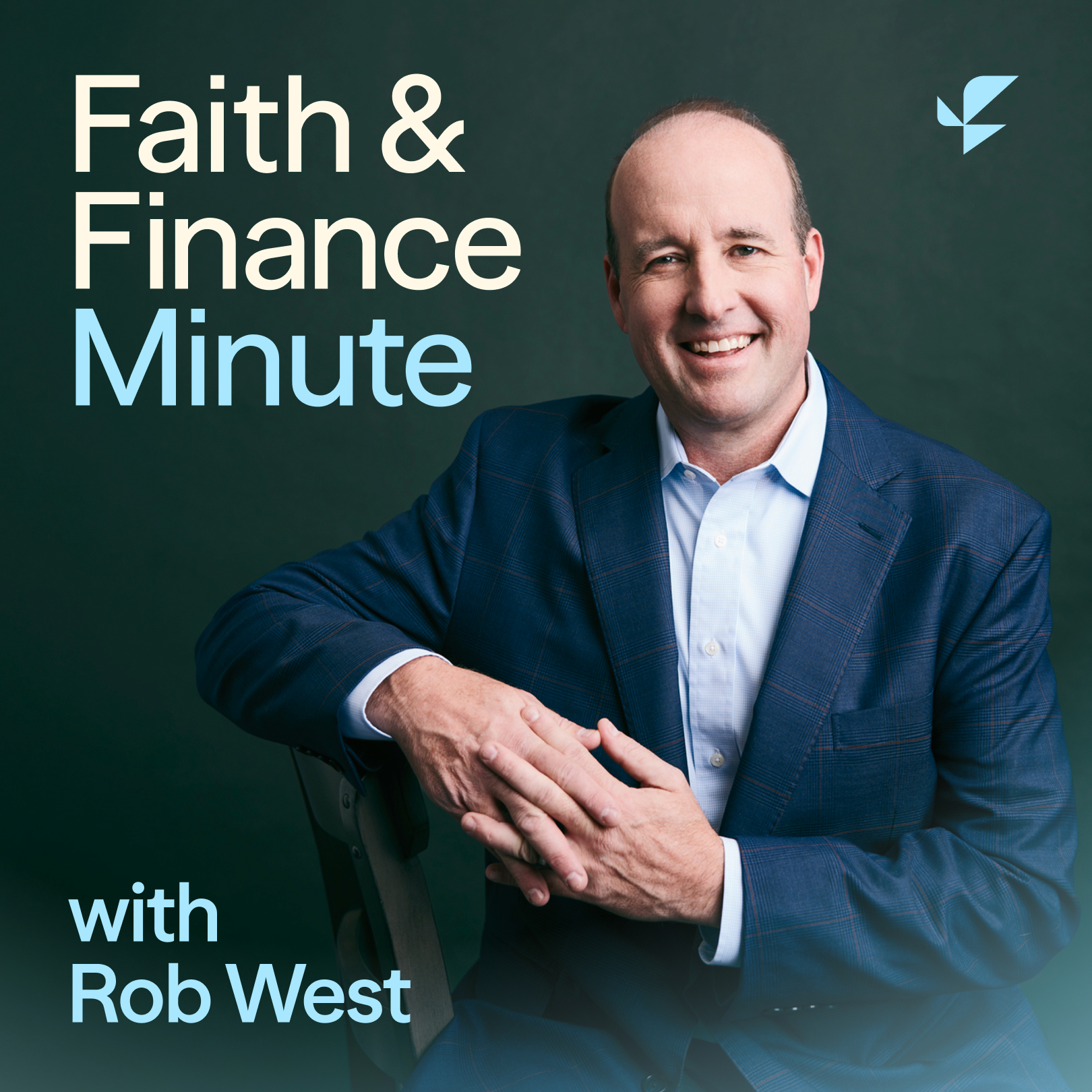
Faith & Finance with Rob West
What if your generosity could be multiplied—without giving another dollar?
Corporate matching gift programs distribute billions of dollars every year, helping nonprofits expand their impact. Yet many believers are surprised to learn that some faith-based ministries don’t qualify for these funds. Understanding how these programs work—and why fairness in charitable giving policies matters—can help unlock greater Kingdom impact.
Today on Faith & Finance, we spoke with Will Lofland, Managing Director of Faith-Based Investing at GuideStone Funds, about how these programs function and why advocacy in this area matters for ministries and donors alike.
What if your generosity could be multiplied—without giving another dollar?
Corporate matching gift programs distribute billions of dollars every year, helping nonprofits expand their impact. Yet many believers are surprised to learn that some faith-based ministries don’t qualify for these funds. Understanding how these programs work—and why fairness in charitable giving policies matters—can help unlock greater Kingdom impact.
Today on Faith & Finance, we spoke with Will Lofland, Managing Director of Faith-Based Investing at GuideStone Funds, about how these programs function and why advocacy in this area matters for ministries and donors alike.
Billions in Potential Generosity
Corporate matching programs are more common than many people realize.
According to Lofland, about 65% of Fortune 500 companies offer charitable gift-matching programs, which distribute roughly $2.86 billion each year. These programs allow companies to match the donations their employees make to qualified nonprofit organizations—often doubling the impact of a gift.
But there’s another surprising statistic: between $4 and $7 billion in potential matching funds go unclaimed annually. In many cases, employees simply don’t know the benefit exists or forget to submit the required matching forms.
When these programs are used properly, they create an incredible opportunity for generosity to multiply.
Unfortunately, not every nonprofit qualifies for these corporate matching programs.
Many companies have policies that unintentionally—or sometimes explicitly—exclude religious organizations. These restrictions can appear in several forms. Some programs prohibit gifts that support “religious purposes” or “religious activities.” Others maintain internal lists of organizations that do not qualify.
The result is that many churches and Christian ministries—organizations that provide food assistance, disaster relief, counseling, education, and global missions—can be excluded from receiving matching funds.
This limits believers' ability to maximize the impact of their generosity when supporting ministries they care deeply about.
Engaging Companies with Grace and Clarity
This is where thoughtful engagement becomes important.
GuideStone Funds invests in many companies through its portfolios, and that position allows their team to communicate directly with corporate leadership. Lofland explained that their approach begins with respect and understanding.
Rather than assuming bad intentions, they approach these conversations with a constructive spirit—seeking to understand the goals of the company’s charitable programs and highlighting the unintended consequences of certain restrictions.
Often, companies simply haven’t considered how their policies affect religious organizations.
One recent example shows how effective this kind of engagement can be. GuideStone met with leadership at Boeing, an aerospace company that previously restricted matching gifts for religious purposes. After discussions with the company, Boeing reviewed its policy and ultimately expanded its matching program to include religious organizations.
That change opened the door for access to hundreds of millions of dollars in potential matching funds each year.
It’s a powerful example of how thoughtful dialogue can help remove barriers and create new opportunities for generosity.
Expanding Kingdom Impact
At the heart of this effort is a simple goal: strengthening the work of churches and ministries around the world.
Matching programs allow believers working in every profession—engineering, finance, healthcare, education, and more—to extend the impact of their generosity. Even if their vocation isn’t ministry, these programs allow them to invest more deeply in the ministries they support.
When companies remove unnecessary restrictions, it helps unlock a significant wave of generosity that can support gospel-centered work in communities across the country and around the world.
If your employer offers a charitable matching program, it’s worth taking a few minutes to check whether your gifts qualify for a match.
You may be able to double—or even triple—the impact of your giving with just a simple form. And when companies ensure that faith-based ministries are treated fairly alongside other nonprofits, it creates a more equitable system that allows generosity to flow freely toward the causes employees care about most.
To learn more about GuideStone’s approach to investing guided by biblical values, visit: GuidestoneFunds.com/Faith.
On Today’s Program, Rob Answers Listener Questions:
My wife and I are both around 59–60. She’s retired and has about $450,000 in her TSP that we haven’t touched. I’m retired from the state but now working a federal job with a smaller TSP. Since she’s now eligible to draw from hers, we’re wondering what the best option is—taking a lump sum and paying the taxes, leaving it invested, or starting monthly payments to supplement our income, especially with the market ups and downs. Also, over the next six months, I may resign from my federal job and begin receiving recurring payments from my $450,000 TSP to supplement my income. Would that be wise, and how would those withdrawals be taxed?
On a previous program, you mentioned new tax limitations for 2026—possibly related to charitable giving or deductions. Could you clarify what those are? And regarding the new 0.5% floor, does that apply to each charitable gift or to the total of all charitable deductions?
What are the key factors someone should consider when deciding when to start taking Social Security? My spouse and I are retired—ages 65 and 64—and living on about $7,000 a month after tax from a pension with no debt. Since we don’t currently need Social Security, we could wait until full retirement age at 67. Does that affect the decision, and how does the guaranteed 8% annual increase work if we delay benefits?
Remember, you can call in to ask your questions every workday at (800) 525-7000. Faith & Finance is also available on Moody Radio Network and American Family Radio. You can also visit FaithFi.com to connect with our online community and partner with us as we help more people live as faithful stewards of God’s resources.
Hosted by Simplecast, an AdsWizz company. See pcm.adswizz.com for information about our collection and use of personal data for advertising.