How The Next Generation of Christians Will Shape Philantrophy and The Clues To How They'll Give
By Christin Fejervary
March 6, 2026
The “next generation” of Christians stand to inherit a historic amount of wealth.
Faithful Steward Issue 5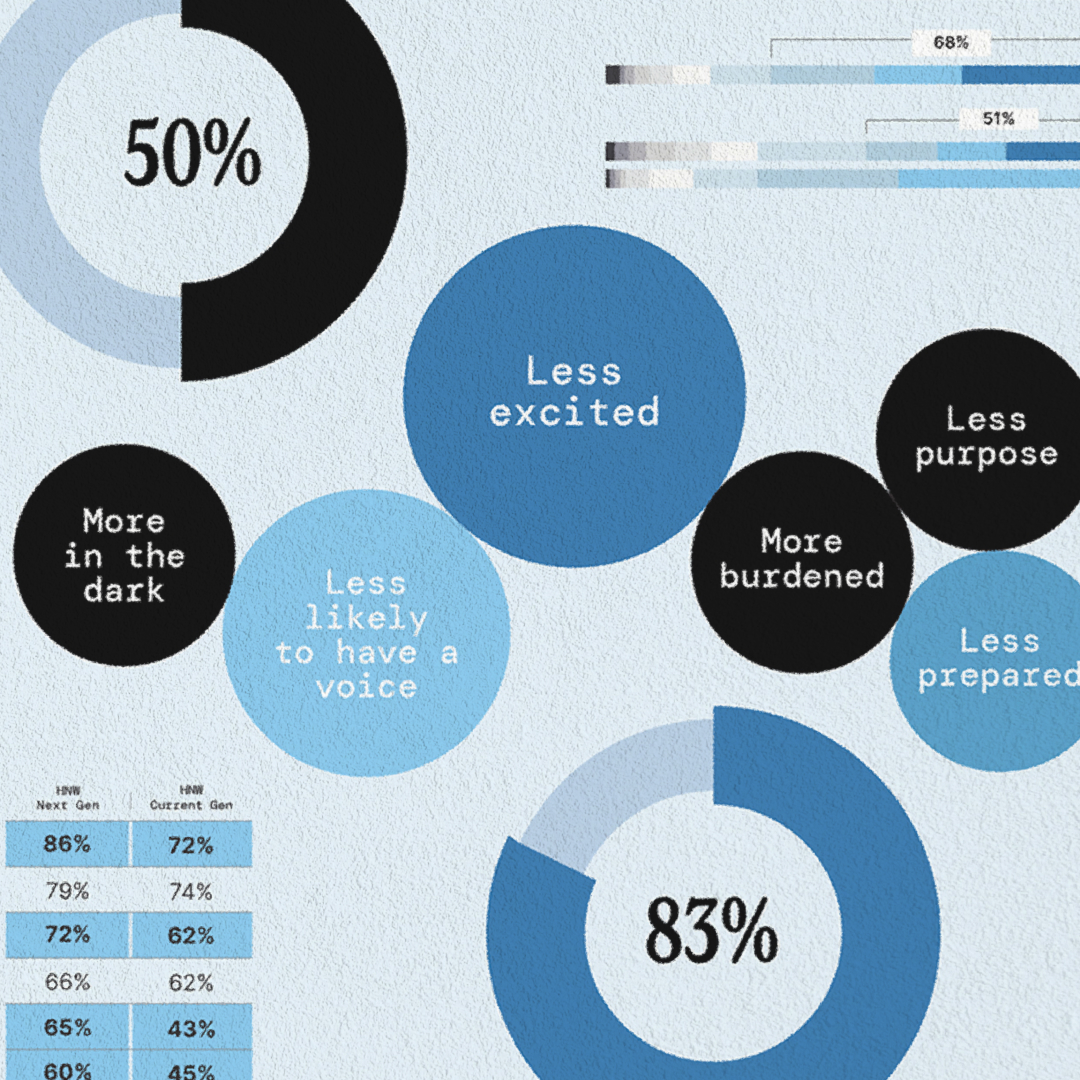
The “next generation” of Christians (mostly composed of Millennials and a few older Gen Zers) stand to inherit a historic amount of wealth in the coming years as Baby Boomers and Gen Xers pass on their assets. The Great Wealth Transfer will make them philanthropic power players.
They’re also, of course, sons, daughters, and grandchildren. They are mothers and wives, fathers and husbands. And they’re the future of charitable giving. It’s essential we know how they’ll give, and how to prepare them to give!
So, at National Christian Foundation (NCF), we asked them about it. We asked hundreds of them. We asked them questions about how their faith guides their giving, how they relate to the Church, how they relate to their parents, and how they feel about wealth and philanthropy more broadly.
Our resulting research suggests there are some important differences between the Christian philanthropic culture of today and the Christian philanthropy that might form as the Great Wealth Transfer continues.
We interviewed 360 Millennial Christians (ages 28-45). Of these, 159 had a high net worth and at least $1 million in investible assets. We wanted to explore their perception of wealth, stewardship, and their faith. In doing so, we gained valuable insights into how they think and how their giving behaviors will manifest in the years to come.
POINT 1: The next generation probably won’t give the way their parents did. Their relationship with the Church and with giving are both distinct.These Next Gen “stewards”—which is the word we give to someone who has either created, inherited, or been entrusted with wealth and who desires to steward it wisely—believe, along with the current generation of stewards (those 45 years or older), that their wealth belongs to God, but only 60% of this younger cohort feel called to give in the same way as their parents.
This shift will have striking implications for philanthropy as the next generation’s priorities will set the tone for stewardship and giving for the coming decades.
[A] Their relationship with the Church is different from the current generation of givers (defined as all givers born before 1980). One example: We found that the next generation feels less connected to the Church as a whole. But the differences get even more interesting from there. [B] We also found that the next generation of givers are hands-on, involved givers. They prioritize the communities they live in every day and charitable work that makes the most of their own talents and gifts.The next generation tends to prioritize communities, rather than institutions. This sense of belonging helps explain why Next Gen stewards are more likely to direct their giving and volunteering toward grassroots initiatives, local ministries, and community-driven efforts. More than 90% of the next generation of Christian stewards told us they want to support groups and charities that make an impact for the better on the communities they live in.
POINT 2: The creation of wealth—and the role the next generation has played in producing it—impacts how it’s most likely to be given.Next-generation stewards aren’t monolithic. There are the expected variations from one person and family to another—variations in giving culture, personal passions, and family history, for example. But there are also discernible and predictable differences between types of Next Gen stewards. Next-generation philanthropists tend to be the boldest, most confident and most innovative when they’ve played a direct role in accumulating wealth.
[C] Next Gen stewards who stand to inherit but haven’t been extensively involved in the creation or management of wealth tend to be more cautious. Some even report feeling burdened by the prospect of inheriting their family’s legacy or directing its charitable work. They’re risk-averse, interested in preservation rather than experimentation.“Hybrids,” or stewards who both stand to inherit and have created wealth, tend to be a balance of these two types.
POINT 3: Not everyone feels prepared emotionally or logistically to inherit wealth.A lot of Next Gen stewards feel ambivalent about the wealth they stand to inherit and manage. This is true of women in particular, with 39% of them reporting they feel left out of the decision-making processes. Almost three-quarters of Next Gen women (70%) reported feeling unprepared, and more than one-third of them struggle to feel a sense of purpose.
[D] Additionally, more than one-third of Next Gen stewards who have not created wealth but stand to inherit it reported feeling “uninformed.” This demographic reported feeling more burdened and overwhelmed by the prospect of wealth management than those who had contributed to wealth creation. POINT 4: Agency is the one powerful contributing factor to long-term flourishing, for every generation and any family.Next Gen stewards’ attitudes toward wealth are complex. But, through our research, we discerned that one capacity is strongly correlated with long-term flourishing and positive attitudes towards wealth: Agency.
In this context, it means taking responsibility for the wealth we have and making our own decisions. We see positive associations with wealth grow dramatically when people have been given the opportunity, in one way or another, to own that responsibility. We see them grow closer to God and to their families if they have exercised agency through wealth management and giving.
For families wanting to develop and manage a philanthropic culture, cultivating agency often looks like involving younger family members in giving practices and inviting them to make decisions about where to give—and how.
Respondents whose feelings about wealth were more positive than negative were respondents who’d been able to work, create, and give actively. They were more comfortable taking risks, had a firmer and clearer sense of purpose and reported feeling closer to their families as a result.
Respondents who’d been given fewer opportunities (or none) to work directly with their family’s wealth often tended to report more negative feelings. They worried about the spiritual burden. They reported feeling guilt.
And empowering the younger generations—giving them agency in giving decisions, and the chance to learn through substantial responsibility and work—makes all the difference.
This means that involving your family in the work and life of charity starts today. It isn’t just about culture or relationships. It isn’t even just about communication. It’s about shared work that serves God, improves the world, and edifies your family.
As this monumental amount of wealth changes hands, both generations have a historic opportunity to convene over what matters most to them and establish a new culture of giving, together.
This article was published in our Faithful Steward magazine, a quarterly publication filled with encouraging stories, biblical teaching, and practical tools to help you grow as a wise and joyful giver. If you'd like to begin receiving Faithful Steward, consider becoming a FaithFi partner.
Related Articles

May 28, 2026
The Christian Ethics of Street-Corner Generosity
Christians are rightly shaped by Scripture’s repeated call to care for the poor....

May 28, 2026
Tithing in Retirement: A Thoughtful Framework
During your working years, tithing is usually simple....

May 27, 2026
What is a Donor Advised Fund?
Many generous believers want their giving to be both intentional and well organized....