Motive Is Everything
By Pierce Taylor Hibbs
December 10, 2025
“There is always some sun around which the planets of our lives turn,” writes Dr. David Powlison, author and theologian.
Faithful Steward Issue 4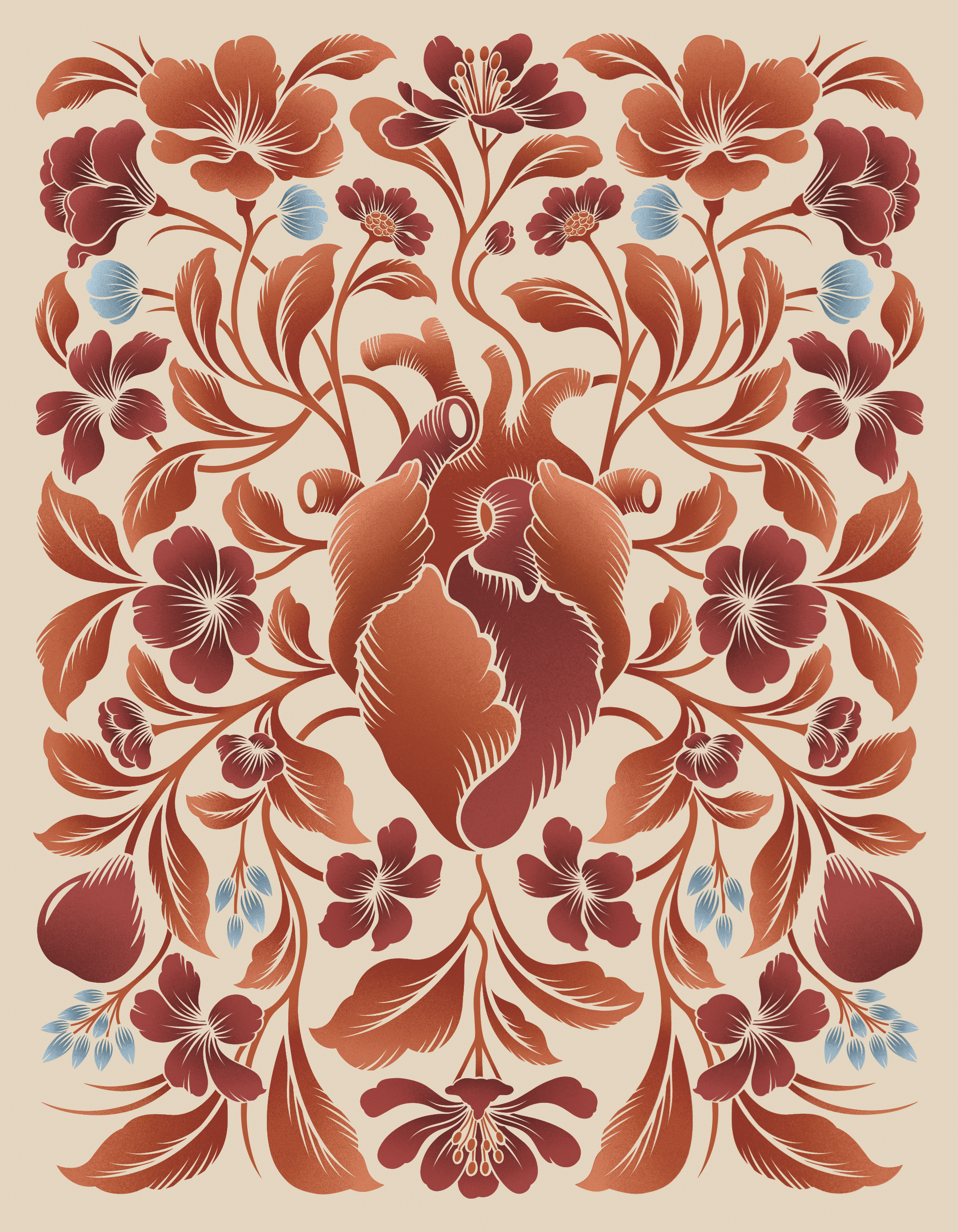
“There is always some sun around which the planets of our lives turn,” writes Dr. David Powlison, author and theologian. Let this imagery settle in. There is always a gravitational pull on something deep inside us. Our hearts are magnets, and there’s always an opposing pole. Always. We were made that way.
Scripture gets at this with the language of “heart” (“lebab” in Hebrew; “cardia” in Greek) or sometimes “kidneys” (In Hebrew “kilyah”). Deuteronomy 5:6 says, “You shall love the Lord your God with all your heart...” (“lebab”), and in Job 19:27, it says, “My heart (“kilyah”) faints within me!”
The language of “heart” points to the deepest part of a person—the pith of the soul. This is the source of our motives. “All of our rational and volitional life,” writes Dr. Herman Bavinck, “has its point of origin in the heart and is governed by it.” All rational and volitional life—all that we think and all that we desire. According to Scripture, the heart is the epicenter for everything a person does.
Jesus uses the image of a treasure chest. Every one of our thoughts, words, and actions is a coin pulled from the heart’s coffer. “The good person out of the good treasure of his heart produces good, and the evil person out of his evil treasure produces evil, for out of the abundance of the heart his mouth speaks” (Luke 6:45).
This is far more practical than we think because it applies to everything we do. One of the most important questions anyone can ask you about anything you do is this: Why are you doing what you’re doing? That’s a question of motive, a question of volition, a question of the heart. And it’s worth much more than we suppose.
A MOTIVE FOR PENNIES
Let me show you how. There’s a famous story from Mark’s Gospel called “The Widow’s Offering” (also in Luke 21:1–4). Jesus is at the temple with his disciples, sitting and watching a procession of people putting offerings in a box. Amidst the clangs and clamor, he waits and stares. And, indirectly, he uncovers motive; he sees a human heart in action.
And he sat down opposite the treasury and watched the people putting money into the offering box. Many rich people put in large sums. And a poor widow came and put in two small copper coins, which make a penny. And he called his disciples to him and said to them, ‘Truly, I say to you, this poor widow has put in more than all those who are contributing to the offering box. For they all contributed out of their abundance, but she out of her poverty has put in everything she had, all she had to live on.’” — Mark 12:41–44
Usually, we jump to proportions to interpret what Jesus says. The woman had little, so what she gave in proportion to what she had was much more than what others gave. But this misses the point. Jesus doesn’t say that her offering was more “for her.” He says simply that she has “put in more than all those who are contributing to the offering box.”
Her offering was more. Period. It was greater, of higher value. To everyone else, this was a poor woman putting down a penny. To Jesus, it was a daughter of God dropping a mountain of gold. She out-gave everyone. How?
Look at the source of her giving—her motive. Everyone else there was giving out of their abundance. They were saying, “I have much, so I will give something.” But the widow gave out of her poverty. She said, “I have little, so I will give everything.” The logic sounds off, doesn’t it? She would have nothing left after this. Jesus says she gave “all she had to live on.” She opened her impoverished hand and went from deficient to destitute, from little to none. It sounds like financial self-sabotage. Why would she do this?
That’s where the heart comes in. Remember the motive question: why is she doing what she’s doing? The text doesn’t say directly. But Jesus implies it. The woman gives everything because she believes—she actually believes—that she already has everything...because she has God. She has loving, trusting faith in the God who gives. God means all to her. God is the sun around which the planet of her life turns.
That’s the only way she could do what she did. She truly loved God with all her heart, as in Deuteronomy 6:5. In the pith of her soul, she is so full that she can let go of everything else. What is a penny compared to the God of glory? She trusts not only in God’s care for her but in God’s care for what she has.
She knows that God can do more with her money than she can. God can do more. So she lets go.
THE WOMAN GIVES EVERYTHING BECAUSE SHE BELIEVES—SHE ACTUALLY BELIEVES—THAT SHE ALREADY HAS EVERYTHING...BECAUSE SHE HAS GOD.
MOTIVE MATTERS MOST
Many of us get hung up on earning and then investing our money in all the “right places,” but we don’t think about our motives nearly enough. We don’t think about the heart. We don’t think about the sun around which the planet of our lives turns. But the heart, to Jesus, is the most important.
Think about it: all the people at the temple that day looked like they were doing the same thing. They were all dropping coins in the coffer. From the outside, they were uniform. But that’s not what matters most to the Son of God. Like His heavenly Father, Jesus looks at the heart (1 Samuel 16:7). At that moment, He looked at the widow’s heart. He looked at the hearts of the religious leaders. And right now He looks at your heart and mine. What does He see?
What matters most to God is not what you give; it’s why you give. God wants to see that He is the sun around which the planet of your life turns. Because if He isn’t, then the only other possibility is that you’re one of the ones who gives “out of your abundance.” Giving out of abundance costs us little because it requires less faith, less heart. How many of the people that day thought twice about what they were giving? How much did the widow think about her own giving? After her fingers released their grip, it was all faith for her, from that moment on. She knew what she was doing. She was worshiping—giving all of herself for all of who God is and all He promises to be for us. And Jesus saw it.
Motive is everything to God. The heart is everything. The planet of your life is turning around something right now. What is it? And when the time comes, will you give out of poverty or out of abundance?
1 Bavinck, Herman. The Wonderful Works of God: Instruction in the Christian Religion According to the Reformed Confession. Translated by Henry Zylstra and Nathaniel Gray Sutanto, Westminster Seminary Press, 2019.This article was published in our Faithful Steward magazine, a quarterly publication filled with encouraging stories, biblical teaching, and practical tools to help you grow as a wise and joyful giver. If you'd like to begin receiving Faithful Steward, consider becoming a FaithFi partner.
Related Articles

May 28, 2026
The Christian Ethics of Street-Corner Generosity
Christians are rightly shaped by Scripture’s repeated call to care for the poor....

May 28, 2026
Tithing in Retirement: A Thoughtful Framework
During your working years, tithing is usually simple....
May 27, 2026
What is a Donor Advised Fund?
Many generous believers want their giving to be both intentional and well organized....