What Sets A Certified Kingdom Advisor (CKA®) Apart? with Sharon Epps | FaithFi
August 26, 2026
What Sets A Certified Kingdom Advisor (CKA®) Apart? with Sharon Epps
Faith & Finance with Rob West
What if the greatest benefit of financial advice isn’t simply what happens to your portfolio, but knowing your financial decisions reflect what matters most?
New research from Kingdom Advisors and Pinkston Group suggests that when financial counsel aligns with a person’s faith and values, the benefits can extend well beyond investment performance. Clients report deeper trust, reduced financial anxiety, and a broader definition of financial success.
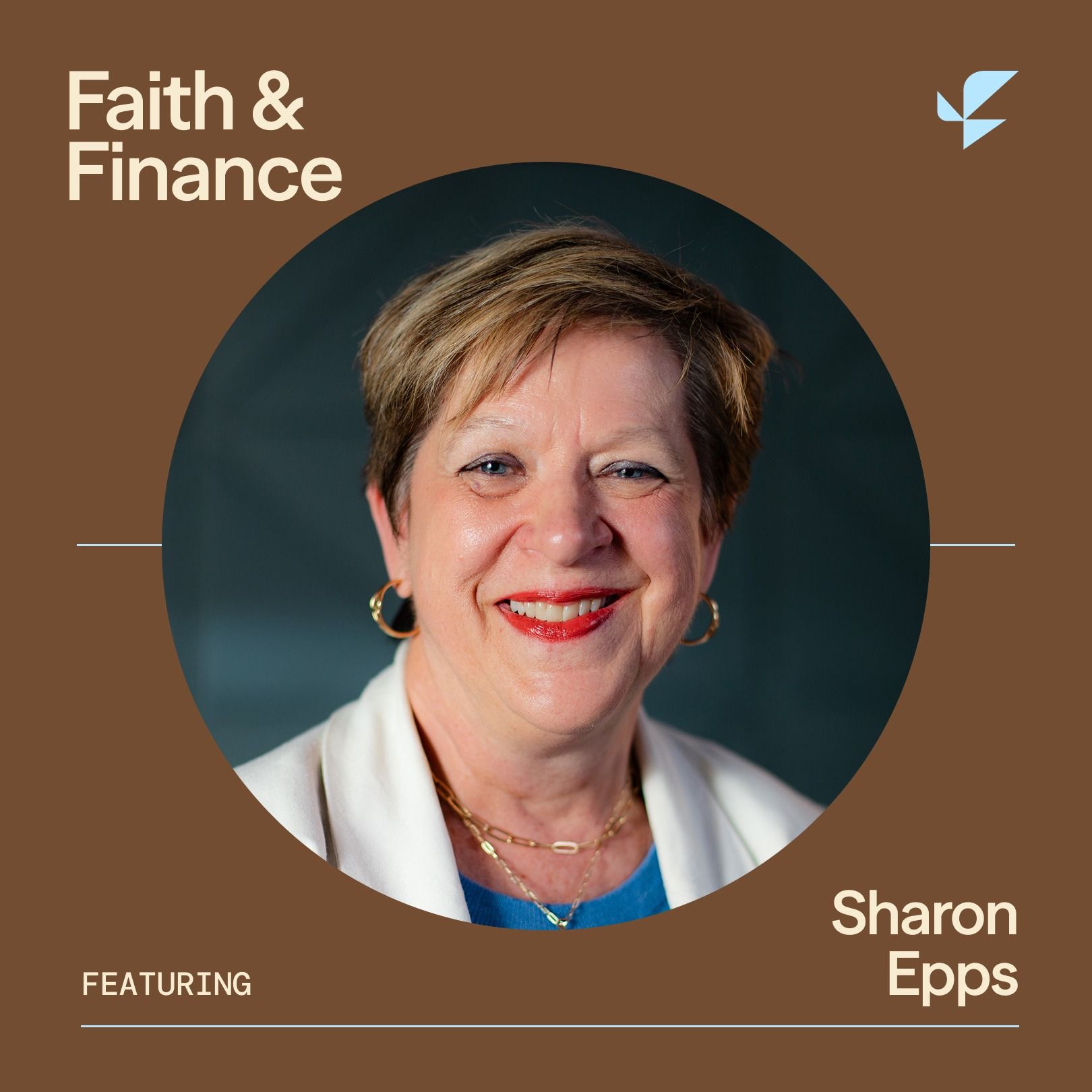
Sharon Epps, President of Kingdom Advisors, joined the show today to unpack what the findings reveal about values-aligned investing, long-term advisor relationships, generosity, and the future of Christian financial advice.
What if the greatest benefit of financial advice isn’t simply what happens to your portfolio, but knowing your financial decisions reflect what matters most?
New research from Kingdom Advisors and Pinkston Group suggests that when financial counsel aligns with a person’s faith and values, the benefits can extend well beyond investment performance. Clients report deeper trust, reduced financial anxiety, and a broader definition of financial success.Sharon Epps, President of Kingdom Advisors, joined the show today to unpack what the findings reveal about values-aligned investing, long-term advisor relationships, generosity, and the future of Christian financial advice.
The Gap Between Interest and Action
One of the study’s most striking findings involves values-based investing. While 81% of Certified Kingdom Advisors® offer values-based investment options, only 15% of their clients currently use them.
Why the gap?
Epps believes several factors may be involved. Some investors still assume that aligning their investments with their values necessarily means accepting lower returns. Others may simply be unaware that faith-aligned options are available because they've never brought it up with their advisor.
There may also be a natural progression in a person’s stewardship journey. Christians often begin by thinking about giving as the primary way their faith intersects with money. Only later do they begin considering whether their saving and investing decisions can also reflect their convictions.
That makes education essential. Advisors can help clients understand how values-based screening works, compare investment options, and evaluate them as part of a disciplined and diversified strategy. For hesitant investors, Epps suggests starting with a smaller portion of a portfolio rather than changing everything at once.
The larger principle is simple: stewardship begins by asking what matters to us before asking how our investments are performing.
Why Peace May Grow Over Time
The research also found that the benefits of working with a Certified Kingdom Advisor® appear to deepen over time.
Among CKA® clients who had worked with their advisor for more than five years, 66% reported a reduction in financial anxiety, compared with 49% among those in shorter advisor relationships.
That may be partly because trust is cumulative.
Over time, an advisor gets to know not only a client’s financial situation but also their family, priorities, goals, and convictions. The relationship becomes less transactional and more of a long-term partnership.
A sound financial plan can also provide perspective during difficult markets. Rather than reacting to every rise and fall, investors can return to a strategy built around long-term goals.
For Christians, there is an even deeper source of peace. Biblical financial counsel continually reminds us that God owns everything and that we are His stewards. That changes the central question from, “How do I protect everything I have?” to, “Lord, how would You have me manage what You have entrusted to me?”
That perspective cannot eliminate financial uncertainty, but it can keep uncertainty from becoming the foundation of our decisions.
More Than Finding the Lowest Fee
Another revealing finding involved the way clients choose advisors.
Only 20% of CKA® clients said fees were the primary factor in selecting an advisor. Epps emphasized that fees still matter. Wise stewardship means understanding what you are paying and ensuring those costs are reasonable and transparent.
But financial advice is about more than purchasing a commodity at the lowest possible price.
When an advisor understands a client’s values, the relationship can encompass far more than investment returns. It can include planning, accountability, generosity, family decisions, and a shared understanding of what money is ultimately for.
That changes the scorecard. The question becomes not simply, “Did my investments outperform?” but also, “Am I becoming more faithful with what God has entrusted to me?”
Younger Investors Want Their Money and Values to Tell the Same Story
The study offered encouraging insight into the next generation as well. Among adults ages 18 to 41, 52% said shared values are extremely important when choosing financial advice.
Epps sees that as an important shift. Younger Christians often want greater consistency between what they believe and the decisions they make in every area of life—including their finances.
Rather than viewing money as a separate, purely financial category, many see it as another tool that should reflect their convictions.
That creates both an opportunity and a responsibility for financial advisors. The next generation is likely to expect conversations about purpose, values, generosity, and stewardship rather than treating those subjects as unrelated to financial planning.
For Christian advisors, that opens the door to something deeper than portfolio management: helping clients understand biblical wisdom and their role as stewards.
A Bigger Definition of Success
Perhaps one of the clearest differences the research reveals is how Certified Kingdom Advisors® think about success. Investment performance still matters. But the scorecard can be broader.
Epps pointed to outcomes such as greater peace, increased generosity, and helping clients faithfully pursue the purposes God has placed before them. The research found, for example, that CKA® clients were twice as likely to report that their giving had “significantly increased” since beginning work with their advisor.
That is particularly noteworthy because many financial advisors are compensated, in some way, based on the assets they manage. Encouraging clients to give generously may reduce those assets, yet a Kingdom-minded advisor can celebrate that generosity because the goal is not merely accumulation.
The goal is faithful stewardship.
What to Look for in a Financial Advisor
If you are looking for financial counsel that incorporates your Christian faith, the first meeting can tell you a great deal.
Notice whether the advisor is asking questions only about your numbers or also about your values. Do they want to understand what matters to you? Are they comfortable discussing how faith influences financial decisions? Can they explain how biblical wisdom shapes the counsel they provide?
Epps also encourages believers to pray about the decision and seek the Lord’s wisdom as they choose whom to trust with such an important relationship.
Proverbs 19:20 says, “Listen to advice and accept instruction, that you may gain wisdom in the future.”
Financial advice at its best should help us do more than grow wealth. It should help us grow in wisdom, make thoughtful decisions, and faithfully steward everything God has placed in our hands.
On Today’s Program, Rob Answers Listener Questions:
I’m 53, our home is paid off, and my husband and I have about $50,000 in checking but no retirement savings. We live simply, and both still work. How should we start putting this money toward retirement?
I’m 33 and own an S corp law practice earning about $40,000 to $60,000 a month. I’m already tithing, using tax strategies, and funding retirement accounts, but I still have significant taxable income. How should I think about deploying the excess beyond simply growing the business?
Remember, you can call in to ask your questions every weekday at (800) 525-7000. Faith & Finance is also available on Moody Radio Network and American Family Radio. You can also visit FaithFi.com to connect with our online community and partner with us as we help more people live as faithful stewards of God’s resources.
Hosted by Simplecast, an AdsWizz company. See pcm.adswizz.com for information about our collection and use of personal data for advertising.