Vocational Stewardship: Working for the Common Good with Dr. Amy Sherman | FaithFi
June 2, 2026
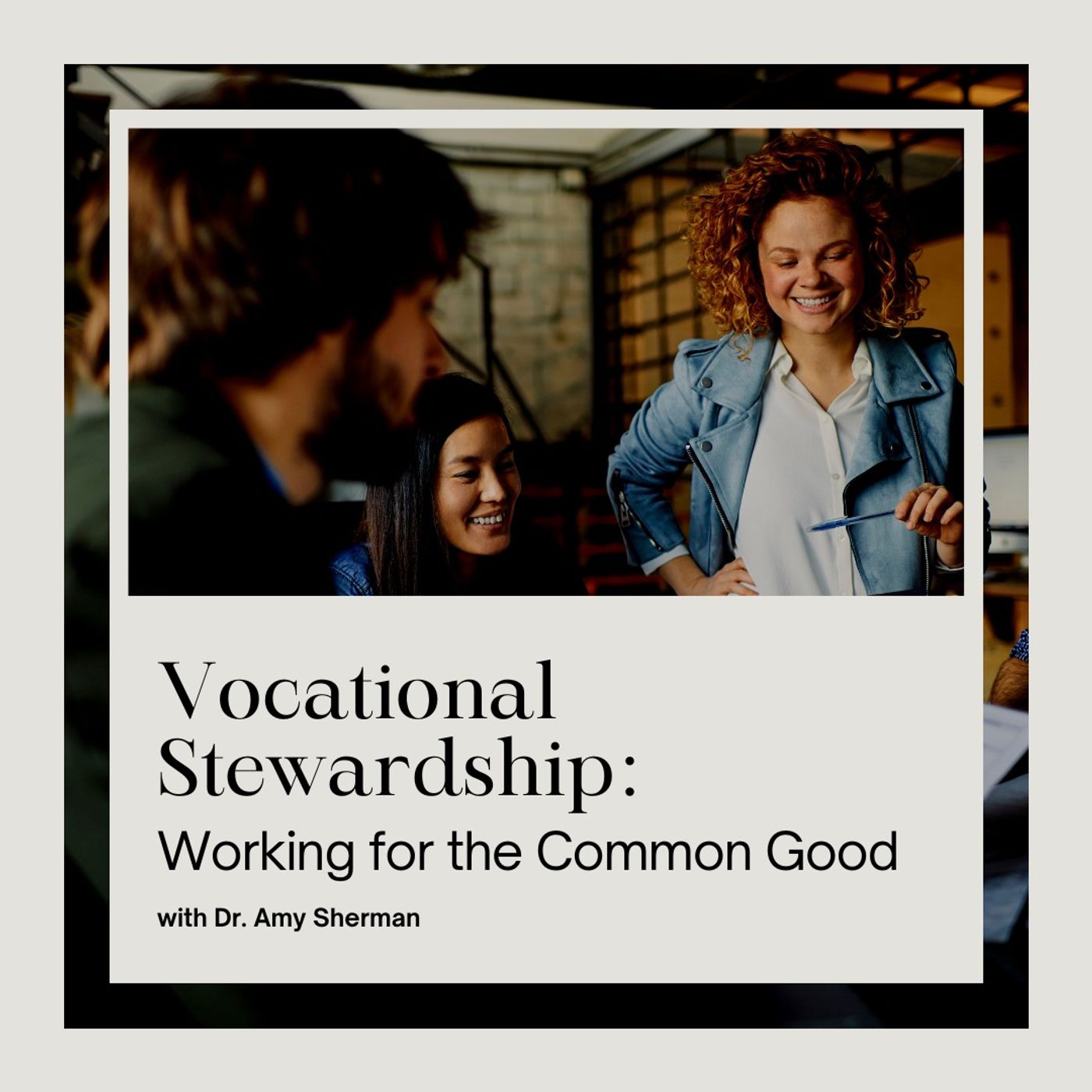
Vocational Stewardship: Working for the Common Good with Dr. Amy Sherman
Faith & Finance with Rob West
Work is not merely a way to make a living. It is also one of the primary ways we love our neighbors.
Whether you lead a company, teach a class, manage a home, serve in your church, care for children, volunteer in your community, or invest resources for the future, God has entrusted you with influence. That influence is not accidental. It is part of your stewardship.
We often think of stewardship in financial terms—and rightly so. But God has given us more than money to steward. He has also entrusted us with skills, relationships, opportunities, knowledge, experience, and influence.
Dr. Amy Sherman has spent years helping Christians see their daily work as a means of seeking the common good and participating in God’s redemptive mission in the world. She calls this vocational stewardship—the faithful use of our work and influence to reflect God’s character, serve others, and contribute to the flourishing of the world around us.
Work is not merely a way to make a living. It is also one of the primary ways we love our neighbors.
Whether you lead a company, teach a class, manage a home, serve in your church, care for children, volunteer in your community, or invest resources for the future, God has entrusted you with influence. That influence is not accidental. It is part of your stewardship.
We often think of stewardship in financial terms—and rightly so. But God has given us more than money to steward. He has also entrusted us with skills, relationships, opportunities, knowledge, experience, and influence.
Dr. Amy Sherman has spent years helping Christians see their daily work as a means of seeking the common good and participating in God’s redemptive mission in the world. She calls this vocational stewardship—the faithful use of our work and influence to reflect God’s character, serve others, and contribute to the flourishing of the world around us.
What Is Vocational Stewardship?
Vocational stewardship begins with the recognition that our work is a gift from God. He has given each of us certain abilities, opportunities, networks, and positions of influence. Some of those gifts are expressed through paid employment. Others are expressed through volunteering, homemaking, caregiving, mentoring, leadership, or service.
In every case, the question is the same: How can I use what God has entrusted to me for His purposes?
Our work is not simply a platform for earning income. It is a platform for reflecting the kingdom of God. It is one of the places where discipleship becomes visible.
That means vocational stewardship is not limited to pastors, missionaries, or people in explicitly ministry-related roles. It applies to business owners, teachers, nurses, engineers, artists, parents, retirees, tradespeople, administrators, and everyone else seeking to serve God faithfully where He has placed them.
How can my work help others experience something of His goodness, justice, beauty, compassion, and care?
More Than Integrity at Work
Faithful work certainly includes character. Christians should be honest, dependable, compassionate, and hardworking. We should do our work with integrity, humility, and excellence.
But vocational stewardship presses us to go a step further. It asks us not only to consider how we do our work, but also what our work contributes.
What does my work make possible for others?
How does it affect employees, customers, clients, families, communities, or creation?
Does it contribute to healing, order, beauty, justice, provision, or human flourishing?
Does it help people experience a small glimpse of what God intends for His world?
These questions help us see work as part of God’s larger redemptive purposes.
A Foretaste of God’s Kingdom
Scripture gives us a beautiful picture of the future God is bringing about—a renewed creation where there is no more suffering, corruption, injustice, or death. God’s kingdom will be marked by peace, wholeness, abundance, community, intimacy with Him, and restored relationships.
Vocational stewardship asks: How can my work today offer others a small foretaste of that coming reality?
That may sound lofty, but it can become very practical.
A business owner might create flexible schedules for employees who are single parents, allowing them to care well for their children. An architect might help clients choose safer building materials and energy-efficient designs that promote health and care for creation. A teacher might create a classroom where students feel seen, challenged, and encouraged. A manager might cultivate a workplace marked by fairness, dignity, and trust.
These are not small things. They are glimpses of God’s kingdom breaking into ordinary places through ordinary faithfulness.
Every Vocation Matters
You may be working full-time, raising children at home, caring for aging parents, leading a company, serving in retirement, or volunteering behind the scenes. Whatever your situation, you have been entrusted with something. You have skills, wisdom, relationships, experience, and influence.
Vocational stewardship is not about having a certain title. It is about asking, “Where has God placed me, and how can I use what He has given me to serve others?”
That question can change the way we see daily life. Work becomes more than a task list. Leadership becomes more than authority. Parenting becomes more than a responsibility. Retirement becomes more than leisure. Investing becomes more than preparation for the future.
All of life becomes an opportunity to reflect Christ.
Investing as Vocational Stewardship
Vocational stewardship also affects the way we think about money—especially investing.
Many people view investing primarily as a way to grow wealth and prepare for the future. Those are legitimate concerns. Wise financial planning is part of good stewardship. But investing is also about deploying capital into companies that shape communities, culture, and the marketplace.
When we invest, we are helping determine which companies grow and thrive. That means Christians can ask deeper questions about what their investments support.
What does this company produce?
How does it treat employees?
Does it contribute to the well-being of communities?
Does it view profit as a means of serving people, or as the ultimate goal?
These questions do not eliminate the need for wise financial analysis. But they do remind us that investing is not morally neutral. Our financial decisions can reflect what we value and whom we seek to serve.
For someone new to this idea, the first step is simple: become more aware of what you own. Look at the companies represented in your portfolio. Over time, consider whether your investments align with your values and contribute to the kind of world you believe honors God.
Work as a Place of Discipleship
God deeply cares about our work. Since we spend so much of our lives working, our discipleship must show up there, too.
Our workplaces, homes, investments, and communities are not separate from our faith. They are places where we are formed into the image of Christ and where we can embody the good news of the gospel.
That does not mean every workday will feel spiritually significant. Much of faithful stewardship looks ordinary: answering emails, making decisions, serving customers, preparing meals, managing employees, helping a neighbor, or showing up with patience when the work is hard.
Every act of honesty, compassion, creativity, courage, justice, and service can become a way of reflecting God’s character.
Faithfulness Where God Has Placed You
Your work matters to God. He has placed you where you are for a reason, and He has given you work to do—not only for your provision, but also for the good of others.
Vocational stewardship invites us to see our influence differently. Instead of asking only, “What can I earn?” we begin asking, “How can I serve?” Instead of viewing work only as a source of income, we begin to see it as a calling to love our neighbors.
And as we do, even our ordinary work can become a glimpse of the world God is making new.
On Today’s Program, Rob Answers Listener Questions:
My father-in-law has EE savings bonds that matured in 2023 and are no longer earning interest. Because he has a substantial income, he’s considering giving us the bonds so we can cash them in and take on the tax liability instead. Is that allowed, and is it the best way to handle the bonds given his income and tax situation?
My company is allowing us to move some 401(k) funds to private investment firms. I have about $1.1 million in my 401(k), and my advisor would charge around 1.99% to manage the funds. Would it be wise to move part of the money to my advisor, or should I keep it in the current 401(k) funds?
Remember, you can call in to ask your questions every workday at (800) 525-7000. Faith & Finance is also available on Moody Radio Network and American Family Radio. You can also visit FaithFi.com to connect with our online community and partner with us as we help more people live as faithful stewards of God’s resources.
Hosted by Simplecast, an AdsWizz company. See pcm.adswizz.com for information about our collection and use of personal data for advertising.