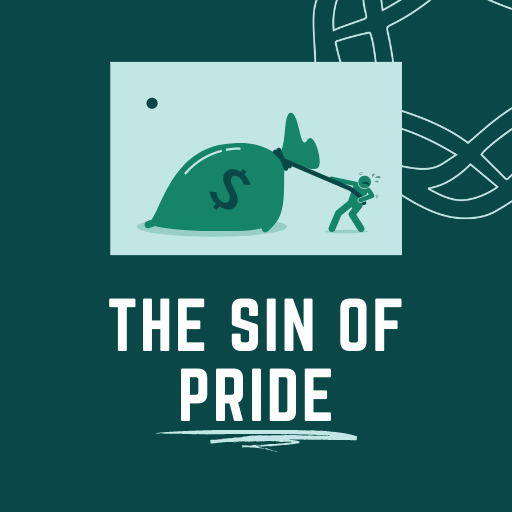
Pride first made its appearance in the Garden of Eden and it has harmed our fellowship with God ever since. But what does thinking too highly of yourself have to do with money?
Isaiah 2:11 reads, “The haughty looks of man shall be brought low, and the lofty pride of men shall be humbled, and the Lord alone will be exalted in that day.” Also, Matthew 7:5, “You hypocrite, first take the log out of your own eye, and then you will see clearly to take the speck out of your brother's eye.” Pride first made its appearance in the Garden of Eden and it has harmed our fellowship with God ever since. But what does thinking too highly of yourself have to do with money? Rob talks about that on this MoneyWise Live.
There is a difference between the sin of pride and what we often call “taking pride.”
There’s nothing wrong with taking satisfaction in your job or your family or doing a job well.
The pride we’re warned about in the Bible is having an exaggerated view of yourself without regard for others.
History proves from the Tower of Babel to the Titanic that kind of pride has proven to be disastrous.
How do you know when you’re having a problem with pride? It's easy to spot in others but difficult to spot pride in yourself.
You’ve become critical of others
Exalting yourself over others
Pride:
Is spiritually deadly
Is toxic to your finances
Can lead to other sins
Leads to all kinds of bad decisions including financial ones
Buying too much house or too fancy a car
Missing bargains because you refuse to buy generic
You're above shopping at discount stores
Running up credit card debt because you deserve a higher lifestyle
The Bible repeatedly warns us that “pride goes before destruction” and often that destruction is financial.
God’s Word encourages us and teaches us how to be humble before God in James 4:10, “Humble yourselves before the Lord, and he will exalt you.”
And humble toward one another - “Love your neighbor as yourself.”
Ephesians 4:2, “With all humility and gentleness, with patience, bearing with one another in love.
Philippians 2:3, “Do nothing out of selfish ambition or vain conceit, but in humility consider others better than yourselves.”
By thinking more highly of others, we humble ourselves and allow God to extend grace to us.
Being financially generous requires humility. Proverbs 19:17 says “Whoever is generous to the poor lends to the Lord, and he will repay him for his deed.”
Next, Rob answers these questions at 800-525-7000 or via email at Questions@MoneyWiseLive.org:
If you have $170,000 of total debt including home and auto and you have sufficient assets to pay off and still have $65,000, is it smart to pay off your debt?
What is POD or Payable on Death (aka TOD Transfer on Death) and when should you use it?
Getting married soon, what are some basic financial steps you should take to get headed in the right direction?
If your employer matches 4% and you have a balance of $251,000 in matched funds with a cost basis $64500 and an outside brokerage firm is recommending you take an NUA or Net Unrealized Appreciation distribution, should you do it?
How do I balance my desire to become debt free and increase my giving?
If you wrote a will few years ago on Legalzoom and now need to update it but were wondering if you should have trust instead, how do you know?
I was able to pay off my house and I still have a little extra money to do something with, plus I don't have a house payment any more. What should I do with this extra money each month?
Should you tithe on an insurance settlement and if so, how should you calculate it considering attorney fees?
Be sure to check out the rest of MoneyWise.org to connect with a MoneyWise Coach or access our books and our many free helpful resources. You can also find us on Facebook (MoneyWise Media) and join the conversation. Thanks for your prayerful and financial support that helps keep MoneyWise on the air. And if you'd like to help, just click the Donate tab at the top of the page.