The Sin of Envy
Once upon a time in America, envy was considered bad form and looked down upon.

Advertisers spend billions to convince you that you’re not happy with your life. Make no mistake, though, the Bible still calls envy a sin.
As one evangelical dictionary puts it, envy is the “sin of jealousy over the blessings and achievements of others.” That’s straightforward and it tells us that the words “envy” and “jealousy” are interchangeable.
Why then is envy a sin? First because God’s Word says so in several places, but most notably as the 10th Commandment in Exodus 20:17:
“You shall not covet your neighbor's house; you shall not covet your neighbor's wife, or his male servant, or his female servant, or his ox, or his donkey, or anything that is your neighbor's.” And of course, “covet” is another word for envy.Today, our neighbors don’t have oxen or donkeys to covet, but we can still envy their new SUV or in-ground pool.
Like the sin of pride, envy also leads to other sins. In James 4:2-3 we find, “You desire and do not have, so you murder. You covet and cannot obtain, so you fight and quarrel. You do not have, because you do not ask. You ask and do not receive, because you ask wrongly, to spend it on your passions.”There’s a difference between envy and the proper motivation to better one’s life. For the one, you’re willing to work hard and be content with what the Lord provides. With envy, however, you feel entitled and deprived. You feel that someone, namely God, owes you something.
Envy is ugly and destructive. James 3:16 tells us, “For where jealousy and selfish ambition exist, there will be disorder and every vile practice.” Envy rears its ugly head early in the Bible. In Genesis 4, Cain is jealous of his brother because God looked with favor on Abel’s offering, but not his. In verse 8 we read, “Now Cain said to his brother Abel, “Let’s go out to the field.” While they were in the field, Cain attacked his brother Abel and killed him.” Envy was the cause of the very first murder. Envy also made Joseph’s brothers feel justified in selling him into slavery in Genesis 37. In verses 23-24 we read, “So when Joseph came to his brothers, they stripped him of his robe, the robe of many colors that he wore. And they took him and threw him into a pit.” Joseph’s brothers would have killed him had Reuben not intervened. We also see the destructive power of envy in two stories from David’s life. First, when Saul became jealous of David’s fame after he slew Goliath. Women sang David’s praises. 1 Samuel 18:8-9 reads, “And Saul was very angry, and this saying displeased him. He said, “They have ascribed to David ten thousands, and to me they have ascribed thousands, and what more can he have but the kingdom?” And Saul eyed David from that day on.” Having first been the victim of envy, David later succumbed to it himself by coveting and taking another man’s wife, Bathsheba, in II Samuel 11. Worse, he sent her husband, Uriah, to certain death in battle to cover his sin. In verse 15, David tells Joab, “Set Uriah in the forefront of the hardest fighting, and then draw back from him, that he may be struck down, and die.” Envy, or jealousy, is a powerful emotion that we must always be on guard against. Proverbs 27:4 warns, “Wrath is cruel, anger is overwhelming, but who can stand before jealousy?”How do you know if envy has taken hold in your life? One way would be to look at your finances. Are you living beyond your means? Running up credit card debt to finance a lifestyle that you can’t afford?
We once said this was, “keeping up with the Joneses.” Now some people call it “FOMO,” an acronym for Fear Of Missing Out. You want what others have and you’re willing to go into debt to get it.
If you don’t get it under control and learn to live on less than you make, you’re headed for financial disaster. Here’s what you can do:
If you need help setting up a budget and finding ways to cut your spending, sign up with one of our budget coaches. They can com e alongside you and take you step by step through the process of getting your finances back on track.Then, pray that the Holy Spirit would give you contentment and gratitude for what the Lord has provided. You’ll find great encouragement in Hebrews 13:5:
“Keep your life free from love of money, and be content with what you have, for he has said, “I will never leave you nor forsake you.”Related Articles
May 15, 2026
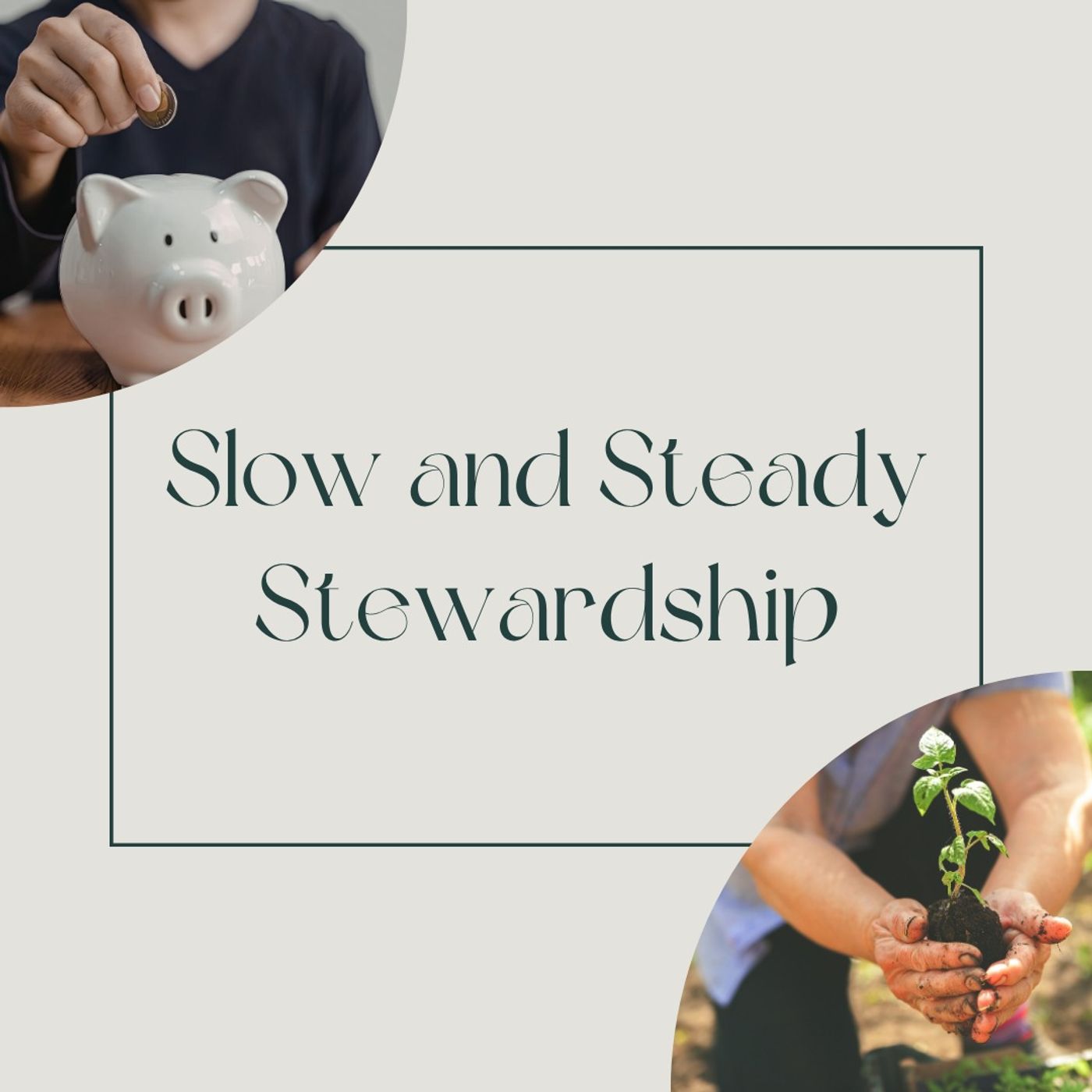
Slow and Steady Stewardship
Do you ever feel like you’re losing the financial race? Rob West encourages us that God’s design for stewardship isn’t a...

May 15, 2026
5 Smart Tips for a Budget-Friendly Family Vacation with Crystal Paine
Summer is not that far off, and for many families, the kids are already dreaming about vacation. But parents may be aski...

May 14, 2026
Are You Working or Competing?
What’s driving your work—purpose or comparison? From the wisdom of Ecclesiastes Rob West observes that even good work ca...