The Life-Giving Potential of Wealth with Randy Alcorn | FaithFi
June 3, 2026
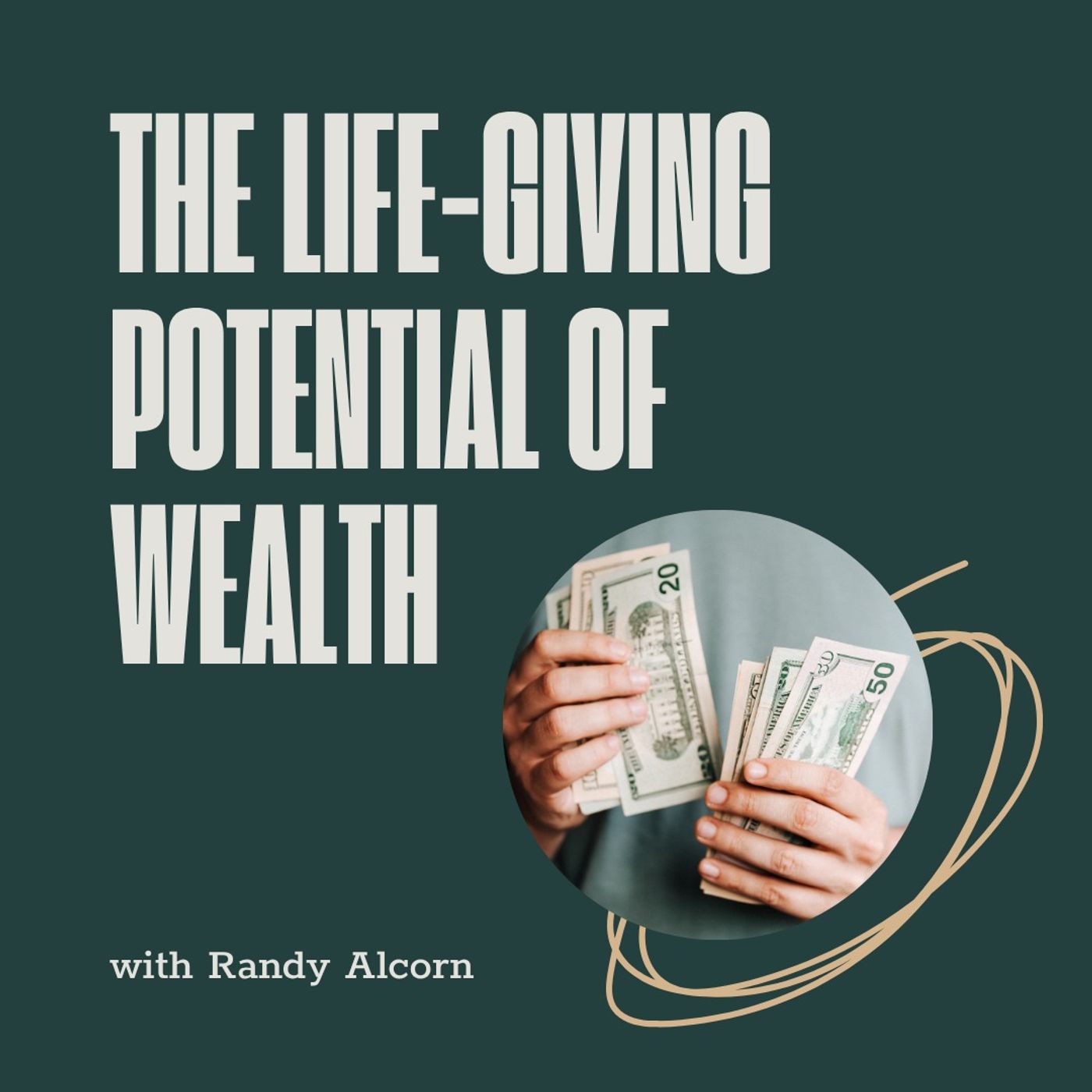
The Life-Giving Potential of Wealth with Randy Alcorn
Faith & Finance with Rob West
What if giving is not losing at all, but investing in what lasts forever?
Jesus tells us in Matthew 6:20 to “store up for yourselves treasures in heaven.” That one command reshapes the way we think about money, possessions, and generosity. Wealth can be dangerous when it owns us, but when it is surrendered to God, it can become a powerful tool for eternal good.
Randy Alcorn, bestselling author and founder of Eternal Perspective Ministries (EPM), has spent decades helping Christians think biblically about money, possessions, generosity, and eternity. His message is both sobering and hopeful: wealth is a test, but it can also become a tool for God’s Kingdom.
What if giving is not losing at all, but investing in what lasts forever?
Jesus tells us in Matthew 6:20 to “store up for yourselves treasures in heaven.” That one command reshapes the way we think about money, possessions, and generosity. Wealth can be dangerous when it owns us, but when it is surrendered to God, it can become a powerful tool for eternal good.Randy Alcorn, bestselling author and founder of Eternal Perspective Ministries (EPM), has spent decades helping Christians think biblically about money, possessions, generosity, and eternity. His message is both sobering and hopeful: wealth is a test, but it can also become a tool for God’s Kingdom.
Money Reveals the Heart
Money has a powerful influence on our spiritual lives because it reveals what we truly value. Jesus said in Matthew 6:21, “For where your treasure is, there your heart will be also.”
The way we handle money is not separate from our discipleship. It shows what we trust, what we prioritize, and where our affections are directed. As Alcorn explains, money is not spiritually insignificant. It has power. Either it will serve God, or we will find ourselves serving it.
That is why Scripture speaks so directly about the danger of loving money. In 1 Timothy 6:9–10, Paul warns that “those who desire to be rich fall into temptation, into a snare,” and that “the love of money is a root of all kinds of evils.” He goes on to say that some have wandered from the faith and pierced themselves with many griefs.
Those are sobering words. Money is a good gift from God. It can provide for needs, bless families, support ministry, and help those who are suffering. But when it becomes the object of our trust or the center of our affections, it competes with God for our hearts.
The danger of wealth is real, but it is not the whole story. Money surrendered to God can be used in deeply meaningful ways.
It can help advance the gospel. It can meet practical needs. It can support Bible translation, provide clean water, help rescue those trapped in exploitation, care for the vulnerable, and strengthen the work of the local church.
Money is not the source of transformation—God is. But God often uses the resources of His people to accomplish His purposes in the world. That is why faithful stewardship begins with surrender. We come before the Lord and say, “This all belongs to You. What do You want me to do with it?”
When wealth is surrendered to God, it loses its grip on our hearts and becomes an opportunity to participate in His redemptive work.
Giving Is Investing in Eternity
Jesus’ command to store up treasures in heaven reframes generosity. Giving is not merely parting with money. It is investing in what lasts.
Alcorn compares this to investing in a company. When you own shares, you naturally begin to pay attention. You read the reports. You notice the headlines. Your interest follows your investment.
The same principle applies spiritually. When we put our resources toward the things of God, our hearts begin to follow. If we want to care more deeply about our church, missions, the poor, or the work of the gospel, one practical step is to invest our time, energy, and money there.
Generosity does not only bless the recipient. It reshapes the giver. It moves our hearts toward the Kingdom of God.
Generosity Produces Joy
In Acts 20:35, Paul reminds the Ephesian elders of Jesus’ words: “It is more blessed to give than to receive.” That does not mean giving is merely a duty. It means generosity leads to joy.
The generous life reflects the heart of God, who gives freely and abundantly. Grace itself is rooted in God’s giving nature. When we give, we are not simply checking off a spiritual responsibility. We are participating in the generosity of God.
That is why giving can loosen anxiety, deepen purpose, and bring joy. The world often defines “the good life” as having more, spending more, and pursuing personal comfort. But Scripture points us toward a better way. In 1 Timothy 6:18–19, Paul urges the wealthy “to do good, to be rich in good works, to be generous and ready to share,” so that they may “take hold of that which is truly life.”
The good life is not found in accumulation. It is found in generosity.
Defining Enough
One of the most important steps in faithful stewardship is learning to define enough.
Without a finish line, we can easily assume that every increase in income is meant to raise our lifestyle. But many of us already have more than we need. The question is not simply, “What can I afford?” but “What has God entrusted to me, and how does He want me to use it?”
A financial finish line helps create margin for intentional Kingdom-focused generosity. It keeps accumulation from becoming automatic. It invites us to ask better questions about contentment, purpose, and eternal impact.
Everything we own is temporary. Possessions wear out. Trends fade. What once felt essential can quickly become clutter. That does not mean material things are evil, but it does mean they cannot bear the weight of our hope.
Giving helps break the hold that money and possessions can have on our hearts.
Giving Is Not Losing
Wealth is both a tool and a test. When we cling to it, it can pull us away from dependence on God. But when we surrender it, money can become a means of worship, service, and eternal investment.
Generosity reminds us that God is our ultimate treasure. It trains our hearts to trust Him. It frees us from the illusion that more money will finally make us secure. And it allows us to participate in the work God is doing in the world.
Giving is not losing. In the Kingdom of God, giving is investing in what lasts forever.
On Today’s Program, Rob Answers Listener Questions:
I live in a 55-plus community in a manufactured home on leased land. We own the home but not the land, which belongs to the community owner. Would a reverse mortgage be possible in this situation, or would a manufactured home on leased land qualify?
I have both a traditional IRA and a Roth IRA for retirement, but I’m not retired yet. Why am I required to take RMDs from my IRA at age 72 or 73, even if I’m still working? Do Roth IRAs have RMDs? And how much can my husband and I give through Qualified Charitable Distributions to help reduce taxes?
Remember, you can call in to ask your questions every workday at (800) 525-7000. Faith & Finance is also available on Moody Radio Network and American Family Radio. You can also visit FaithFi.com to connect with our online community and partner with us as we help more people live as faithful stewards of God’s resources.
Hosted by Simplecast, an AdsWizz company. See pcm.adswizz.com for information about our collection and use of personal data for advertising.