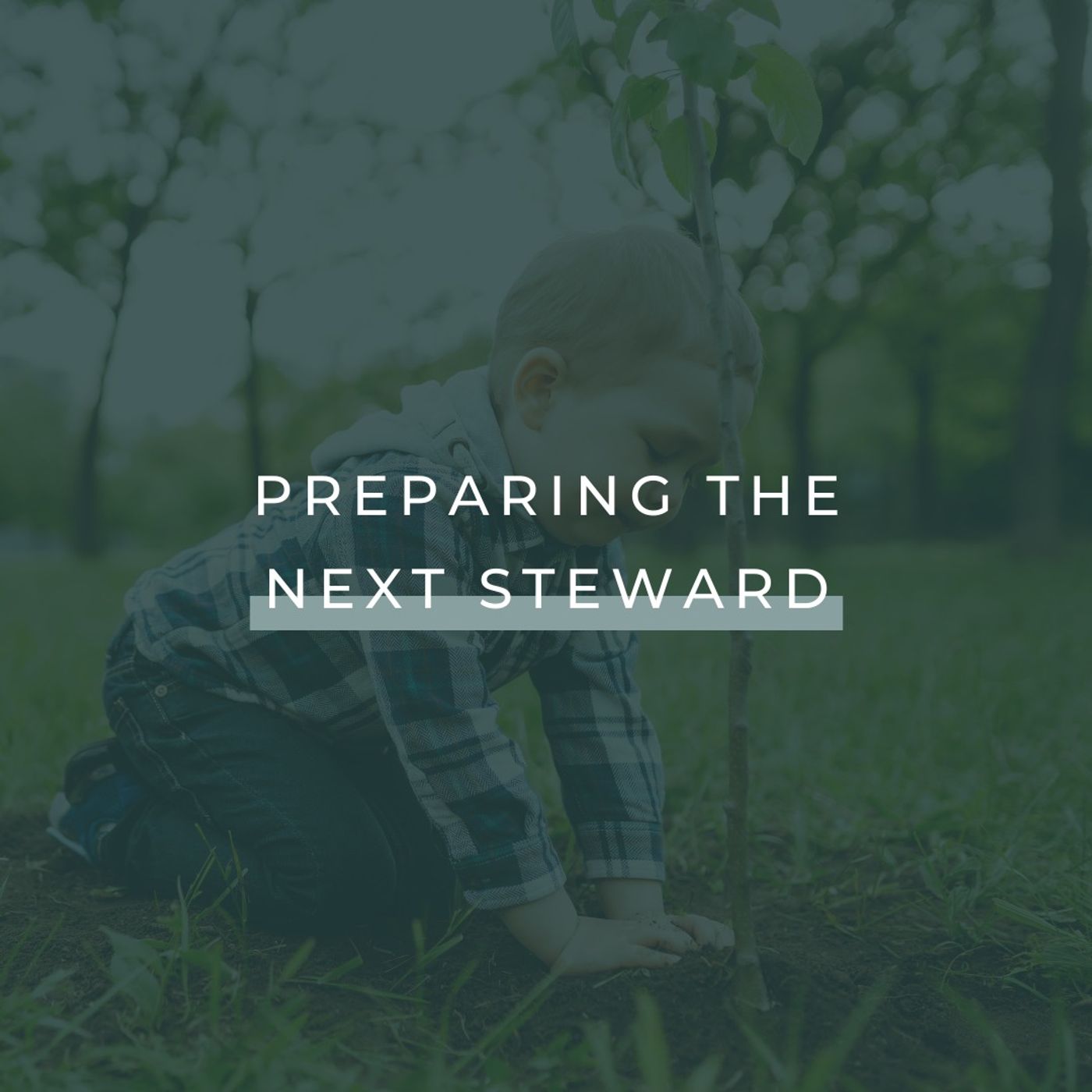
Jonathan Edwards once said, “True legacy consists not of what we leave behind, but of what we instill in others.” That insight cuts against the grain of how many of us think about inheritance.
We often focus on leaving behind money, assets, or property. But Scripture calls us to think bigger. What we pass on isn’t just wealth—it’s wisdom, character, and a legacy of faithfulness.
So the real question isn’t simply, "What will I leave behind?" It’s, “Who am I preparing to receive it?”
Jonathan Edwards once said, “True legacy consists not of what we leave behind, but of what we instill in others.” That insight cuts against the grain of how many of us think about inheritance.
We often focus on leaving behind money, assets, or property. But Scripture calls us to think bigger. What we pass on isn’t just wealth—it’s wisdom, character, and a legacy of faithfulness.
So the real question isn’t simply, "What will I leave behind?" It’s, “Who am I preparing to receive it?”
The Tension: Wealth Without Wisdom
There’s a natural desire in all of us to provide for the people we love—children, grandchildren, or others God has entrusted to our care. And that desire is good.
Proverbs 13:22 reminds us: “A good man leaves an inheritance to his children’s children.”But Scripture also gives us a warning. Proverbs 20:21 says, “An inheritance gained hastily in the beginning will not be blessed in the end.”
Why? Because when wealth is passed on without wisdom, it can become more of a burden than a blessing. The goal isn’t just to transfer assets—it’s to transfer stewardship.
Your heirs are not merely recipients. They are future managers of what ultimately belongs to God. And that changes everything.
Inheritance Is About Responsibility
Throughout Scripture, inheritance is deeply tied to identity and responsibility.
In the Old Testament, land wasn’t just property—it was connected to covenant, calling, and faithfulness. Families didn’t simply receive something; they were entrusted with something. The same is true today.
If we pass on wealth without preparing the heart, we risk creating confusion—or even harm. But if we invest in spiritual formation, in a biblical understanding of stewardship, and in trust in God as the true Provider, then what we leave behind becomes a tool for Kingdom impact.
More is caught than taught. The way you handle money right now—how you spend, save, give, and trust God—is shaping the next generation, whether you realize it or not.
Your financial life is telling a story:
Is it a story of fear or faith?
Of accumulation or generosity?
Of control or surrender?
Long before your children or grandchildren receive anything from you, they are learning from you.
2. Communicate Intentionally
One of the biggest mistakes families make is avoiding conversations about money, values, and legacy. But silence creates confusion.
Deuteronomy 6:6–7 encourages us to talk about God’s ways throughout everyday life. That includes how we think about money.
Talk about:
Why you give
How you make financial decisions
What you hope they carry forward
Help them see that money isn’t the goal—it’s a tool.
3. Train, Don’t Just Transfer
Psalm 78 calls us to tell the next generation the works of God so that they will “set their hope in God.”
Faithfulness is learned over time. That means giving the next generation opportunities to practice stewardship now—not someday. It might look like:
Helping a child budget their allowance
Inviting a teenager into family giving decisions
Walking alongside an adult child as they navigate financial choices
We’re not just preparing them to receive—we’re preparing them to steward.
4. Trust God With the Outcome
This is where it becomes deeply personal.
Even with the best preparation, you can’t control what someone else will do. At some point, you release what you’ve taught, modeled, and invested—and entrust it to God. Psalm 24:1 reminds us: “The earth is the Lord’s, and the fullness thereof.”
That includes your resources—and your legacy.
You are not the owner. You are the steward. And the same will be true for the next generation.
The Legacy That Matters Most
So instead of asking, “How much should I leave behind?” a better question might be: “How well am I preparing the one who will receive it?”
Because the greatest inheritance you can leave isn’t what’s in your accounts.
It’s a heart that treasures God above all. It’s a life that says, “God owns it all. I am His steward.” It’s a vision of money as a tool to serve His purposes.
That’s the kind of legacy that impacts your children—and your children’s children.
You can order a copy for yourself or receive a discount when you place a bulk order for your church or small group at FaithFi.com/Shop.
On Today’s Program, Rob Answers Listener Questions:
Should my 78-year-old brother keep his 2.2% mortgage or pay it off and invest instead? Also, how should we approach selling his out-of-state property—back to family or to an investor?
I’m setting up a trust—what should I expect to pay, and what factors should I consider?
After selling our home, should we use the proceeds to pay off our new house or invest them along with $169,000 in a CD?
I gifted my sister $35,000 for a car—do either of us need to report it to the IRS?
Remember, you can call in to ask your questions every workday at (800) 525-7000. Faith & Finance is also available on Moody Radio Network and American Family Radio. You can also visit FaithFi.com to connect with our online community and partner with us as we help more people live as faithful stewards of God’s resources.
Hosted by Simplecast, an AdsWizz company. See pcm.adswizz.com for information about our collection and use of personal data for advertising.