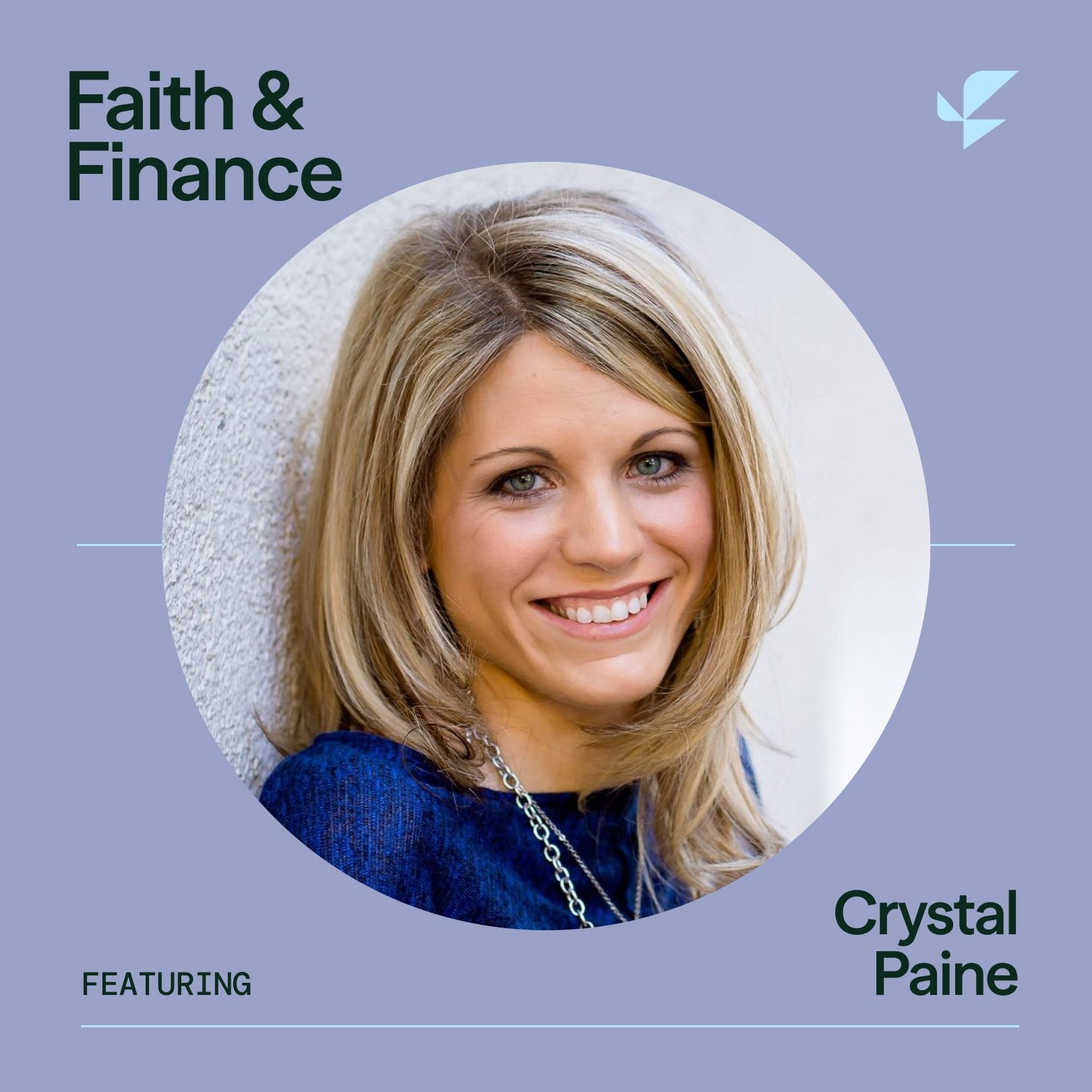
Building Healthy Money Habits While Raising Kids with Crystal Paine | FaithFi
September 14, 2026
Building Healthy Money Habits While Raising Kids with Crystal Paine
Faith & Finance with Rob West
Money stress rarely stays confined to a spreadsheet. It can shape a home's atmosphere, affect a marriage, and influence how children think about money long after they’ve grown up.
That’s one reason Crystal Paine, creator of MoneySavingMom.com and author of The Seven Habits of Financially Healthy Women, believes financial health is about far more than simply earning more or getting all the numbers right.
In fact, when Crystal surveyed 4,000 women about their relationship with money, one theme surfaced again and again: fear. Financial stress often left women feeling isolated, ashamed, or worried about whether they were doing enough for their families.
But healthy financial habits don’t require a perfect income or a perfect financial situation. They begin with honesty, intentionality, and small choices made consistently over time.
Money stress rarely stays confined to a spreadsheet. It can shape a home's atmosphere, affect a marriage, and influence how children think about money long after they’ve grown up.
In fact, when Crystal surveyed 4,000 women about their relationship with money, one theme surfaced again and again: fear. Financial stress often left women feeling isolated, ashamed, or worried about whether they were doing enough for their families.
But healthy financial habits don’t require a perfect income or a perfect financial situation. They begin with honesty, intentionality, and small choices made consistently over time.
It’s easy to define financial health by visible milestones: being debt-free, having a large savings account, earning a certain income, or reaching some other financial goal.
Those can certainly be worthwhile goals. But Crystal encourages a broader perspective. Financial health is about learning to manage money with purpose rather than fear.
Money is a tool. And whether you have a lot or a little, you can make thoughtful decisions about how you use what has been entrusted to you. Small habits practiced consistently can gradually change the direction of your finances.
Sometimes those decisions seem almost insignificant. Bringing water from home instead of buying a bottle while you’re out won’t transform your finances overnight. Neither will skipping one unnecessary purchase or setting aside a few dollars.
But repeated choices add up. That principle matters not only for your finances but also for the example you set for your children.
Your Kids Are Watching How You Handle Money
Parents teach their children about money whether they realize it or not.
Crystal remembers explaining financial decisions to her children when they were young—why the family paid cash, why they chose not to buy certain things, and why they handled money the way they did.
Years later, she has watched her older children begin making some of those same choices for themselves.
Children notice more than we sometimes realize. They observe whether conversations about money create panic or peace. They see whether spending is impulsive or purposeful. They notice generosity, sacrifice, contentment, and self-control.
In many ways, more is caught than taught.
That doesn’t mean parents need to manage money perfectly. It means we should recognize that our everyday financial decisions are helping shape the next generation’s understanding of money.
Understand the Financial Story You Inherited
Of course, not everyone grew up with a healthy financial example.
Some people learned discipline and generosity from their parents. Others grew up around financial conflict, scarcity, overspending, anxiety, or complete silence about money.
Those experiences can continue influencing us as adults without our realizing it.
Crystal encourages people to look back and ask: What did I learn about money growing up? What conversations did my family have? What behaviors were modeled for me? And how are those experiences shaping the choices I make today?
Sometimes spending habits have roots much deeper than the purchase itself. They may be connected to experiences, unmet desires, or patterns developed years earlier. Recognizing those influences can help us make different choices moving forward.
As Crystal puts it, we cannot change what we are unwilling to confront.
Avoiding the numbers may feel safer in the short term, especially when finances already feel overwhelming. But avoidance rarely creates financial peace. Opening the statements, reviewing the spending, and understanding where things actually stand can be an important first step toward making progress.
Seek Understanding in Your Marriage
Money disagreements can become especially difficult in marriage because two people often enter the relationship with very different financial histories.
One spouse may see spending as freedom while the other sees saving as security. One may have grown up with very little, while the other rarely heard money discussed at all.
That’s why financial conversations should not begin with, “I’m right, and you’re wrong.” Instead, begin with curiosity.
Ask questions about what your spouse experienced growing up and why certain financial decisions feel important to them. Understanding doesn’t mean you will automatically agree, but it can replace frustration with compassion and make productive conversations much easier.
You may not be able to control every financial decision another person makes, but you can take responsibility for the areas entrusted to you and seek greater unity with humility and patience.
Let Your Spending Reflect What Matters Most
Our financial decisions often reveal our priorities.
One helpful exercise is to look at your spending from the last three months and ask what story those transactions tell.
Does your spending reflect what you say matters most?
Perhaps your family values generosity, margin, meaningful experiences together, education, or becoming debt-free. Whatever those priorities may be, your daily financial decisions should increasingly align with them.
That doesn’t mean every dollar must accomplish some profound purpose. But it does mean our overall financial direction should reflect intentional choices rather than simply reacting to whatever demands our attention.
A Budget Can Create Freedom
For many people, the word budget immediately sounds restrictive. Crystal prefers to think of it differently.
Call it a budget, money plan, or spending plan. The name matters less than the purpose: deciding ahead of time how you want to use the resources you have.
Rather than limiting freedom, a thoughtful plan can actually create it.
When you know where your money is going, you can prioritize what matters, reduce uncertainty, and look back with greater confidence knowing your spending reflected the priorities you intentionally established.
A budget isn’t punishment. It’s simply a tool for stewardship.
Take the Next Small Step
Healthy financial habits usually aren’t built through one dramatic decision. They’re formed through hundreds of ordinary ones.
Reviewing your spending. Having an honest conversation with your spouse. Bringing lunch from home. Saving a little more. Teaching your children why your family makes certain financial choices. Facing something you’ve been avoiding.
The progress may sometimes feel microscopic, but small steps are still steps forward.
And those choices can extend far beyond your own financial life. The habits you practice today help create the financial atmosphere your children grow up in—and may influence how they steward money when they have families of their own.
You don’t need to fix everything today. Start with one intentional choice, and then make another tomorrow.
On Today’s Program, Rob Answers Listener Questions:
Social Security says I owe about $22,300 from years ago when I worked while receiving disability benefits, even though I had multiple reviews and was never told I owed anything. How can I verify the amount, understand why it took so long to notify me, and make sure the debt is accurate?
I’m receiving cancer treatment through the VA. Is there any annual or lifetime dollar limit on VA-covered care that could cause me to lose coverage or require me to get private insurance?
Remember, you can call in to ask your questions every weekday at (800) 525-7000. Faith & Finance is also available on Moody Radio Network and American Family Radio. You can also visit FaithFi.com to connect with our online community and partner with us as we help more people live as faithful stewards of God’s resources.
Hosted by Simplecast, an AdsWizz company. See pcm.adswizz.com for information about our collection and use of personal data for advertising.